My ClassicPress Website

Operation Eternal Darkness — The “Black Wednesday” Siege
Conflict Spotlight: Operation Eternal Darkness — The “Black Wednesday” Siege

Intelligence Status: MASS-CASUALTY STRATEGIC DEGRADATION

Location: Beirut, Tyre, Bekaa Valley, and Southern Lebanon

Date: April 30, 2026 (Reflecting on April 8–10 events)

What the world now calls “Black Wednesday” stands as the single deadliest day of the 2026 Lebanon War. Under the operational order “Operation Eternal Darkness,” the Israel Defense Forces (IDF) launched a 10-minute saturation strike on April 8 that obliterated residential blocks, critical bridges, and healthcare logistics. This escalation occurred just hours after a U.S.-Iran brokered ceasefire was announced, which Israel asserted did not apply to Lebanese territory.

I. The 10-Minute Onslaught: Technical Scale

At 2:30 PM local time, the Israeli Air Force (IAF) executed what analysts describe as the “largest coordinated wave of strikes” in the country since the 1982 invasion.

  • The Salvo: Over 50 fighter jets utilized approximately 160 munitions to strike 100 targets within a 10-minute window.
  • Target Profile: While the IDF claimed to strike Hezbollah command centers, the bombardment hit densely populated areas in central Beirut (Corniche al-Mazraa, Salim Salam) without prior evacuation warnings, causing “total chaos.”
  • Confirmed Casualties: The finalized non-final count stands at 357 dead and over 1,200 injured, with at least 99 women and 30 children among the fatalities.

II. Infrastructure Severance: The Fall of Qasmieh

A key objective of “Eternal Darkness” was the total isolation of southern Lebanon from the rest of the country.

  • The Last Bridge: On April 8, Israeli munitions damaged the Qasmieh Bridge in Tyre—the last of seven operational crossings linking the south to Beirut.
  • Total Severance: By April 16, subsequent strikes completely destroyed the Qasmieh Bridge, effectively trapping hundreds of thousands of civilians and severing a tenth of Lebanon from the national grid and aid routes.

III. The Humanitarian Collapse

Lebanon’s health system is currently operating at the “edge of collapse” following the targeted degradation of medical infrastructure.

  • Medical Fragility: As of late April, six hospitals and 55 primary healthcare centers have been forced to close. In Tyre, health staff at Hiram Hospital were injured during direct strikes, and an ambulance was struck in a separate incident.
  • Displacement Crisis: Over 1.2 million people (roughly 20% of the population) have been displaced. Currently, 140,000 are sheltering in public schools, impacting the education of over 256,000 students.


WarsWW Intelligence Note [REF: ETERNAL-DARK-2026]

The nomenclature “Operation Eternal Darkness”—a reference to the ninth plague of Egypt—signals a shift in Israeli military doctrine toward coercive civil pressure. By striking high-value socioeconomic hubs like Corniche al-Mazraa and the Rifai Roasteries hangar, the IDF is targeting the “civilian center of gravity” to force a total Hezbollah disarmament during the fragile U.S.-led diplomatic talks in Washington.


10 minutes, 50 jets, 160 munitions—a case study in ‘Coercive Degradation’.

Daily Brief: April 30, 2026
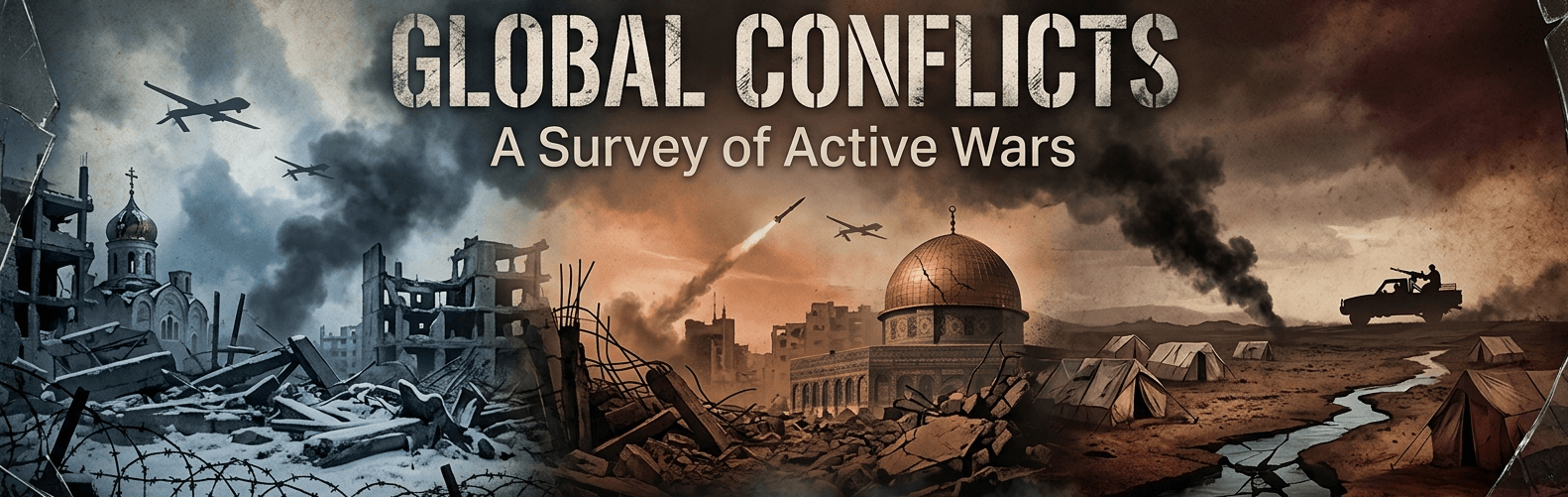
WarsWW Daily Brief | April 30, 2026

Intelligence Status: MULTI-FRONT ESCALATION / HUMANITARIAN CRITICAL

Global Security Index: HIGH (7.8/10)

I. Middle East: The Mediterranean Interception & Lebanon “Black Wednesday”

The relative calm of the Gaza ceasefire has been shattered by a high-stakes maritime confrontation and a massive airstrike campaign in Lebanon.

II. Horn of Africa: The Piracy Resurgence

While we’ve been tracking Houthi activity, a second maritime front has opened off the Somali coast, creating a “perfect storm” for global shipping.

  • Triple Hijacking: In the last seven days, three vessels have been hijacked off Somalia, including the cement carrier Sward (seized April 26) and the oil tanker Honour 25 (seized April 21) [[5.1], [5.2]].
  • Tactical Warning: The EU naval monitoring center has advised all vessels to maintain a 150-nautical-mile buffer from the Somali coast between Mogadishu and Hafun [[5.2]]. This forces traffic even closer to Houthi strike zones, effectively creating a “no-go” corridor in the western Indian Ocean [[5.2]].

III. Eastern Europe: The May Day Drone Slump

  • Tourism Under Fire: Following the “666-Salvo,” Ukrainian drone attacks targeting the Black Sea coast have caused a sharp slump in Russian May holiday hotel bookings. Tourism infrastructure is now being treated as a legitimate economic target [[3.1]].
  • Diplomatic Snub: In a notable cooling of relations, President Putin has declined to invite Donald Trump to the May 9 Victory Day military parade in Moscow [[3.1]].

IV. Humanitarian Alert: South Sudan Hunger Spiral


WarsWW Intelligence Note [REF: DAILY-2026-0430]

The resurgence of Somali piracy is a strategic “force multiplier” for the Houthi blockade. By squeezing maritime traffic from both sides of the Horn of Africa, non-state actors are successfully driving up the cost of global trade faster than the Operation Prosperity Guardian coalition can secure the lanes.
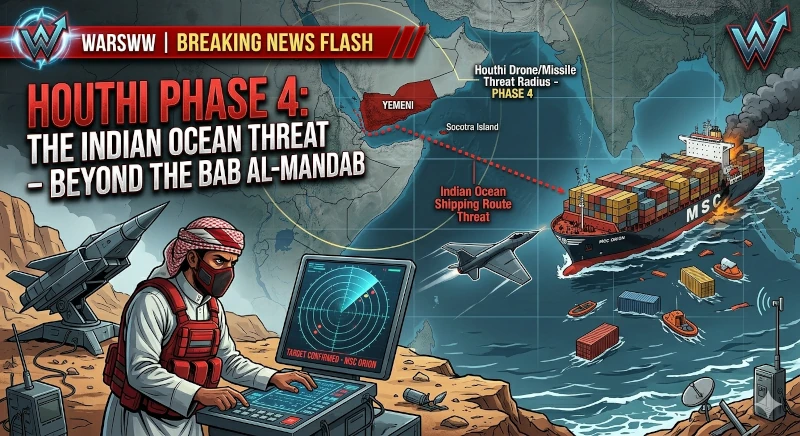
Houthi Fourth Phase Indian Ocean Shipping Risk 2026

Conflict Spotlight: Phase Four — The Houthi Indian Ocean Expansion

Intelligence Status: STRATEGIC BREAKOUT / LONG-RANGE INTERDICTION

Date: April 29, 2026

The Houthi movement (Ansar Allah) has officially initiated its “fourth phase” of maritime operations, shifting its focus from the confined waters of the Red Sea to the vast expanse of the Indian Ocean. This escalation follows through on threats made earlier this month to target any vessels associated with Israel, the U.S., or the UK that attempt to bypass the Red Sea blockade by sailing around the Cape of Good Hope.

. The Proof of Concept: The MSC Orion Strike

To signal this new capability, Houthi military spokesperson Yahya Sarea confirmed a targeted drone strike on the MSC Orion in the Indian Ocean yesterday, April 28, 2026.

II. Global Impact: The “Dual Blockade” and Oil Spikes

The Houthi expansion coincides with the ongoing 2026 Strait of Hormuz crisis, where Iranian forces have largely blocked energy trade since February 28.

III. Counter-Measures: The Limits of Deterrence

Despite the U.S.-led Operation Prosperity Guardian conducting repeated airstrikes on launch sites, Houthi forces have retained a high level of operational autonomy.

WarsWW Intelligence Note [REF: HOUTHI-OCEAN-2026]

The Houthi move into the Indian Ocean represents the death of the “Cape of Good Hope” safety valve. If the Indian Ocean is no longer a viable bypass for Red Sea traffic, the maritime insurance market may effectively collapse for vessels with any Western or Israeli ties. This is not just a military expansion; it is a direct attack on the logistical architecture of the global economy.


UNSC Gaza Transitional Governance Sudan Sanctions 2026

Conflict Spotlight: The Gaza Governance Gap & Sudan’s Sanction Surge

Intelligence Status: POST-CEASEFIRE FRAGILITY / SANCTIONS ESCALATION

Date: April 29, 2026

The UN Security Council (UNSC) convened yesterday, April 28, 2026, for a high-level open debate led by Bahrain to address the deteriorating security landscape in the Middle East and the escalating humanitarian crisis in Sudan. The session revealed a deepening rift between the diplomatic “Comprehensive Plan” and the lethal reality on the ground in both Gaza and Khartoum.

I. Gaza: The “Yellow Line” and Governance Gridlock

Despite the Comprehensive Plan to End the Gaza Conflict (UNSCR 2803) endorsed last year, Assistant Secretary-General Khaled Khiari warned the Council that the ceasefire is now “increasingly fragile.”

II. Sudan: Targeting the “Invisible War” Architects

In a significant move toward accountability in the Sahel-adjacent conflict, the UNSC 1591 Sanctions Committee yesterday approved the addition of four entries to its Sudan Sanctions List .

image original from Thomas Franke


Daily Brief Apr 29, 2026

BLUF

Iran is in active strategic collapse: Trump publicly confirmed Tehran has declared a “state of collapse” and is requesting the reopening of the Strait of Hormuz, while US-Iran nuclear talks remain stalled and a maritime blockade continues with uncertain duration. Simultaneously, Russian Shahed drone strikes on Ukrainian port infrastructure escalate economic warfare, and the DOJ’s indictment of former FBI Director Comey signals continued domestic institutional turbulence in the United States.

KEY DEVELOPMENTS

REGIONAL HIGHLIGHTS

🌎 Americas

Severe weather continues across the US central corridor — flash flood warnings in Arkansas and Texas (Sabine River), freeze warnings in Colorado, and frost advisories across Nebraska and Kansas. Multiple active FEMA wildfire declarations in Florida (Cow Creek, Railroad Complex fires) and Georgia remain open. Tornado watches in Arkansas have been cancelled. A M2.8 earthquake was felt by 222 people near Granite Bay, CA.

🌍 Europe

A US bomber (callsign HAGAR92) observed over western Europe near the Belgium/Luxembourg/Germany border region at low-to-medium altitude — routine but notable in current threat environment. King Charles III hosted Trump at Buckingham Palace, with diplomatic exchanges drawing wide social media attention, including a notable quip referencing French language. UK local elections approach on May 7 alongside Scottish Parliament and Senedd votes.

🌏 Middle East

The Iran portfolio dominates. CVN-78 Gerald R. Ford remains in the Red Sea region (CSG-12), CVN-72 Abraham Lincoln and CVN-77 George H.W. Bush are in the Arabian Sea (confidence: moderate on exact positions). Ali Al Salem Air Base in Kuwait logged over 210 air raid alarms during the Iran War period — bunker art documentation emerging from US troops. US-Iran nuclear talks described by experts as “stalled,” with the IAEA chief warning strikes may set Iran back but are unlikely to end its nuclear program. Gaza ceasefire remains tenuous; UNSC discussed governance planning.

🌏 Asia-Pacific

Balikatan 2026 exercise validated multinational defensive readiness with US, Philippine, Australian, and New Zealand forces conducting coordinated land-air fires against simulated adversary attacks — a direct signal toward China. USS George Washington (CVN-73) remains in port at Yokosuka. A M4.4 earthquake struck 121 km east of Miyako, Japan (no tsunami). Super Typhoon Sinlaku FEMA disaster declaration for Northern Mariana Islands remains active. Measles outbreak in Bangladesh affects 58 of 64 districts with 166 deaths reported.

🌍 Africa

Mali reporting active unrest with armed activity in Bamako and other cities, contested between the government and what it calls “hostile forces.” UNSC added four entries to its Sudan sanctions list. Active fire hotspots detected via MODIS/VIIRS in Ethiopia. Chad travel advisory upgraded to Level 4 (Do Not Travel), citing crime, terrorism, and health risks.

INDICATORS TO WATCH

  1. Hormuz Strait Status & Iran Collapse Trajectory: Watch for any Iranian government communications on leadership transition, ceasefire extension talks, or unilateral reopening of Hormuz. A formal US declaration of “end of Iran war” is reportedly under consideration by the Trump administration (per TASS/Reuters sourcing).
  2. UAE OPEC Exit Confirmation: Requires verification from official UAE government or OPEC secretariat channels. If confirmed, expect significant oil market repricing and potential cartel fragmentation dynamics.
  3. Russian Foreign Fighter Recruitment Signals: Monitor Eastern European border security reports, Wagner/African Corps-adjacent social media, and Central Asian recruitment vectors for evidence of accelerated mobilization campaigns.
  4. Gaza Medic Killings & UNSC Response: Israeli operations targeting medics (reported by Al Jazeera) may trigger formal UNSC action or escalate humanitarian access debates — watch for emergency sessions or resolution drafts.
  5. CISA 911 Emergency Gateway Vulnerability (Intrado EGW): Critical-rated ICS vulnerability in emergency dispatch infrastructure. Watch for exploitation indicators, particularly given elevated domestic political tensions following Comey indictment.


The Pan-American Highway Massacre — Mordisco’s “Pre-Election” Offensive

Intelligence Status: MASS-CASUALTY TERRORISM / ELECTORAL DESTABILIZATION

Location: Cajibío, Cauca Department, Colombia

Date: April 28, 2026

Colombia has entered a state of emergency following a devastating explosives attack on the Pan-American Highway that targeted civilian transit and shattered hopes for a “Total Peace” during the 2026 election window. On Saturday, April 25, 2026, an explosive device decimated a civilian bus in the El Tunel area of Cajibío, killing at least 20 people and wounding 36 others. The massacre marks the peak of a weekend-long “terrorist escalation” that saw 26 coordinated attacks across the southwestern departments of Cauca and Valle del Cauca.

I. The Perpetrator: The Rise of “Iván Mordisco”

Colombian Army Chief Gen. Hugo López has officially attributed the bombing to the Central General Staff (EMC), the largest dissident faction of the former FARC rebels, specifically the network led by the country’s most-wanted man, Iván Mordisco [[3.1]].

II. The May 31 Election: Democracy Under Siege

The timing of the massacre is strategically aligned with the May 31 Presidential Election. United Nations observers have warned that non-state armed groups are using this violence to undermine the electoral process and control civilian voting patterns.

III. Regional Gridlock: The Pan-American Chokehold

By striking the Pan-American Highway, the EMC has successfully paralyzed the primary artery for trade between Colombia and Ecuador.

News-writing goals for WarsWW.net

Custom Gem

morning! You caught the exact moment this situation turned from a regional tragedy into a national security crisis. The Pan-American Highway bombing is being framed as the “darkest day” in Colombia’s 2026 election cycle.

Here is the WarsWW Spotlight for the Colombia massacre, drafted with the strict inline-source protocol you require.


Conflict Spotlight: The Pan-American Highway Massacre — Mordisco’s “Pre-Election” Offensive

Intelligence Status: MASS-CASUALTY TERRORISM / ELECTORAL DESTABILIZATION

Location: Cajibío, Cauca Department, Colombia

Date: April 28, 2026

Colombia has entered a state of emergency following a devastating explosives attack on the Pan-American Highway that targeted civilian transit and shattered hopes for a “Total Peace” during the 2026 election window [[1.1]]. On Saturday, April 25, 2026, an explosive device decimated a civilian bus in the El Tunel area of Cajibío, killing at least 20 people and wounding 36 others [[1.1], [3.3]]. The massacre marks the peak of a weekend-long “terrorist escalation” that saw 26 coordinated attacks across the southwestern departments of Cauca and Valle del Cauca [[3.1], [3.2]].

I. The Perpetrator: The Rise of “Iván Mordisco”

Colombian Army Chief Gen. Hugo López has officially attributed the bombing to the Central General Staff (EMC), the largest dissident faction of the former FARC rebels, specifically the network led by the country’s most-wanted man, Iván Mordisco [[3.1]].

II. The May 31 Election: Democracy Under Siege

The timing of the massacre is strategically aligned with the May 31 Presidential Election. United Nations observers have warned that non-state armed groups are using this violence to undermine the electoral process and control civilian voting patterns [[4.3]].

III. Regional Gridlock: The Pan-American Chokehold

By striking the Pan-American Highway, the EMC has successfully paralyzed the primary artery for trade between Colombia and Ecuador.


WarsWW Intelligence Note [REF: CAUCA-2026-0428]

The Cajibío massacre confirms that the 2016 Peace Accord exists in name only in the southwest. For the WarsWW archive, the primary development here is the democratization of high-impact terror tactics—Mordisco is no longer fighting a guerrilla war for territory; he is fighting a “hybrid war” for political leverage, using civilian blood as currency.


Mexico — The Fall of “The Gardener” and the Pacific Siege

Conflict Spotlight: The Siege of the Pacific — The Fall of “El Jardinero”

Intelligence Status: POST-DECAPITATION SUCCESSION WAR

Location: Nayarit and Jalisco, Mexico

Date: April 28, 2026

In a multi-state operation that marks a critical escalation in Mexico’s “Total War” against organized crime, the Mexican Navy (SEMAR) and Special Forces arrested Audias Flores Silva (alias “El Jardinero”) yesterday, Monday, April 27, 2026 [[2.2]]. Flores Silva was widely identified as the primary successor to Nemesio Oseguera Cervantes (“El Mencho”), who was killed in a high-intensity military raid just two months ago in February [[1.1]].

I. The Operation: 19 Months of Shadowing

The capture of the 45-year-old commander was the result of 19 months of coordinated surveillance between Mexican intelligence and U.S. agencies like the DEA [[4.2]].

II. Tactical Fallout: “Coordinated Chaos”

While the arrest was “surgical,” the retaliation has been expansive. Following the news of the capture, CJNG cells launched a wave of “narcoblockades” across the states of Nayarit and Jalisco, burning vehicles and attacking local businesses to impede federal movements [[2.1]].

III. The Succession Crisis: A Leaderless Empire

Security analyst David Saucedo warns that while the arrest is a “significant blow,” the CJNG can quickly reinvent itself through internal violence and fragmentation [[2.1]].


WarsWW Intelligence Note [REF: JALISCO-2026-0428]

The capture of “El Jardinero” validates the Trump administration’s 2025 designation of the CJNG as a terror organization [[4.1]]. This arrest is a “geopolitical insurance policy” for President Sheinbaum, demonstrating that Mexico can deliver high-value targets without requiring the direct U.S. military intervention threatened by Washington [[3.3]].


Spotlight: CJNG COMMANDER ‘EL JARDINERO’ CAPTURED IN NAYARIT; RETALIATORY BLOCKADES UNDERWAY.

Featured image by: Abraham Sanguino

Up Front Apr 28, 2026

BLUF

Iran-U.S. nuclear negotiations are deteriorating rapidly, with Trump signaling readiness to resume bombing and Iran’s latest proposal unlikely to gain acceptance — the Strait of Hormuz remains closed and the UNSC held an emergency session demanding its reopening. A catastrophic Colombian highway bombing (21 dead) marks the worst civilian attack in the country in decades. Markets are exhibiting a split signal: tech-led equity gains mask an underlying Fear sentiment reading of 33, with crude oil elevated above $97 on continued Persian Gulf supply disruption.

KEY DEVELOPMENTS

REGIONAL HIGHLIGHTS

Americas

Colombia’s highway bombing by narco-rebel factions is the defining event — 21 dead, worst civilian attack in decades. With the presidential election on May 31, this will harden security debates and may accelerate government negotiations or military operations against FARC dissidents. Severe weather continues across the U.S. Midwest: tornado watches across southern Illinois, flash flooding along the Missouri River extending through May 1. Wildfire FEMA declarations remain active in Florida (Cow Creek, Railroad Complex fires) and Georgia.

Europe

King Charles III’s White House visit carries transatlantic diplomatic significance under conditions of Anglo-American stress over Ukraine policy. German Chancellor Merz has publicly floated the idea of Ukraine ceding territory as a condition for EU membership — a significant rhetorical shift that signals Western negotiating posture changes. Russia expanded its EU sanctions list targeting officials involved in arming Ukraine. USS George R. Ford (CVN-78) remains positioned in the Eastern Mediterranean / Red Sea region.

Middle East

Iran diplomacy is the dominant story. The ceasefire struck April 7 is under maximum stress; U.S. bombing resumption is openly threatened. Iran’s Hormuz closure continues to extract global economic pain, with the UNSC now convened but unable to compel action. Bahrain stripped 69 people of citizenship over alleged Iran support — a signals-intelligence indicator of Gulf state pressure. USS Abraham Lincoln (CVN-72) remains positioned in the Arabian Sea; USS Gerald R. Ford in the Eastern Mediterranean. Israeli settler violence against Palestinians and house-burning was reported, adding friction to West Bank security.

Asia-Pacific

A M6.1 earthquake struck Hokkaido, Japan (370,000 in MMI V zone; green alert, no tsunami). Two M4.5 earthquakes near Kuqa, Xinjiang, China. A M4.6 struck off Kokopo, Papua New Guinea. The Indonesia train crash near Jakarta killed five. The West Bengal Legislative Assembly election is three days away (April 29). USS George Washington (CVN-73) remains in port at Yokosuka.

Africa

Coordinated jihadist attacks across Mali are intensifying, consistent with a broader Sahel deterioration pattern. Satellite fire data shows active burn zones across South Sudan and Ethiopia. Sudan’s ongoing conflict continues. No new major kinetic developments in East Africa in the last 24 hours, though WHO measles outbreak in Bangladesh (166 deaths, 19,000+ suspected cases across 58 districts) merits monitoring given regional proximity.

INDICATORS TO WATCH

  1. Iran Nuclear Talks (Next 24–48 hrs): Watch for any formal U.S. rejection or counter-proposal to Iran’s latest offer. Trump administration signaling (Truth Social, WSJ briefings) will be the leading indicator. A breakdown = high probability of U.S. airstrikes resuming.
  2. Strait of Hormuz — Shipping Traffic and Tanker Movements: Any resumption of tanker transits or Iranian signal of willingness to reopen Hormuz would be a major market-moving development. AIS dark-ship tracking and USNI fleet movements are key sensors.
  3. King Charles–Trump Meeting Outcomes: Public optics of the meeting will signal the health of the UK-U.S. relationship on Ukraine, NATO burden-sharing, and trade (UK-U.S. tariff deal under negotiation).
  4. West Bengal Election (April 29): Closely contested; result will have implications for Indian domestic politics and BJP-opposition dynamics heading into state-level electoral cycles.
  5. Intrado 911 EGW Vulnerability Exploitation: Monitor CISA and sector-specific ISACs for any indicators of active exploitation of this critical-severity emergency services infrastructure vulnerability.


Update on Chernobyl Nuclear Risks Apr, 27, 2026

WARSWW FLASH! | Immediate Update

Intelligence Status: NUCLEAR RISK / STRATEGIC COERCION

Date: April 27, 2026 (40th Anniversary Context)

A critical “Flash” risk assessment has been issued for the Chornobyl Exclusion Zone, following a targeted Russian aerial campaign that has crippled the regional energy infrastructure supporting the decommissioned plant’s cooling systems. The escalation occurs exactly 40 years after the 1986 disaster, a date President Zelenskyy is now utilizing to emphasize the immediate dangers of Russian occupation and energy terrorism.

The Energy Cut: Cooling Pool Threat

The “666-unit” salvo over the weekend (April 25, 2026) struck the high-voltage transmission lines that provide the backup electrical power necessary to keep the decommissioned reactors’ cooling pools operational [[1.2]].

II. Occupation & Degradation

Zelenskyy used the anniversary address to remind global leaders that Russian forces held the Chornobyl plant for 35 days during the initial 2022 invasion.

Here is the Flash Update on the escalating nuclear risks at the Chernobyl site, designed for rapid indexing.


WARSWW FLASH! | Immediate Update

Intelligence Status: NUCLEAR RISK / STRATEGIC COERCION

Date: April 27, 2026 (40th Anniversary Context)

A critical “Flash” risk assessment has been issued for the Chornobyl Exclusion Zone, following a targeted Russian aerial campaign that has crippled the regional energy infrastructure supporting the decommissioned plant’s cooling systems. The escalation occurs exactly 40 years after the 1986 disaster, a date President Zelenskyy is now utilizing to emphasize the immediate dangers of Russian occupation and energy terrorism.

I. The Energy Cut: Cooling Pool Threat

The “666-unit” salvo over the weekend (April 25, 2026) struck the high-voltage transmission lines that provide the backup electrical power necessary to keep the decommissioned reactors’ cooling pools operational.

II. Occupation & Degradation

Zelenskyy used the anniversary address to remind global leaders that Russian forces held the Chornobyl plant for 35 days during the initial 2022 invasion.


WarsWW Intelligence Note [REF: CHORNOBYL-2026]

Moscow’s renewed focus on energy infrastructure near Chornobyl—coupled with their ongoing reckless actions at the Zaporizhzhia plant—is a form of strategic coercion. By deliberately creating a localized “critical cooling failure,” Russia can hold Europe hostage with the threat of a secondary nuclear disaster, bypassing traditional nuclear deterrence.


Situation Report: Ukraine “666-Salvo” Performance Check

Situation Report: Ukraine “666-Salvo” Performance Check

Intelligence Status: STRATEGIC ESCALATION / COERCIVE DEGRADATION

Date: April 27, 2026

Final Casualty Count: 10 Dead / 67+ Injured

The “666-unit” aerial assault launched by Russia on April 25, 2026, represents a watershed moment in the 2026 phase of the war. While Ukrainian air defenses achieved a high interception rate, the sheer volume of the saturation attack successfully impacted 23 locations across the country, signaling a shift from battlefield attrition to the systematic “coercive degradation” of the Ukrainian state.

I. The Dnipro Siege: Tactical “Double-Tap” and Infrastructure Failure

Dnipro served as the epicenter of a 20-hour rolling bombardment that utilized 47 missiles and 619 drones.

II. NATO Violation and Regional Escalation

The scale of the “666-salvo” resulted in a direct spillover into NATO territory and neighboring neutral states.

III. Ukrainian Retaliation: The “Urals Deep-Strike”

Ukraine responded to the salvo with its own unprecedented strategic escalation. On April 26, Ukrainian drones reached the Urals for the first time in the war, striking targets over 1,800km from the border.


WarsWW Intelligence Note [REF: DNIPRO-2026-0427]

The April 25 salvo confirms that Russia has successfully moved into a mass-production phase for its “False Target” doctrine. By utilizing hundreds of low-cost Gerbera and Italmas drones to map and deplete Western-supplied air defenses, they are clearing “corridors” for high-velocity ballistic strikes. The Romania crash and the Moldovan blackout highlight that the kinetic risks of this conflict are no longer contained within Ukrainian borders.