Japan Type 88 Missile Launch Philippines Balikatan 2026 First Island Chain

Conflict Spotlight: The First Island Chain Debut
Intelligence Status: HISTORIC DEPLOYMENT / MULTILATERAL DETERRENCE
Theater: Northern Luzon, Philippines / South China Sea
Date: May 14, 2026
JAPAN FIRES TYPE 88 MISSILES FROM PHILIPPINE SOIL; HISTORIC BALIKATAN DRILL TARGETS SHIP IN SOUTH CHINA SEA; FIRST ISLAND CHAIN DEFENSE CEMENTED.
For the first time in modern history, the Japan Ground Self-Defense Force (JGSDF) has executed a combat-speed missile launch from foreign soil, targeting a decommissioned vessel in the waters of the Philippines’ Exclusive Economic Zone (EEZ) defensenews.com.
I. The Weapon: Type 88 SSM (JGSDF)
The Type 88 is a truck-mounted, sea-skimming anti-ship missile. Its deployment to the Philippines represents a massive upgrade in local “Area Access/Area Denial” (A2/AD) capabilities.
- The Fire Mission: Part of Exercise Balikatan 2026, the missile was fired from a coastal battery near Laoag, Ilocos Norte—the closest point in the Philippines to the Bashi Channel, a critical chokepoint for Chinese submarines entering the Pacific japantimes.co.jp.
- Target Confirmation: The missile successfully struck a target ship located 20 nautical miles offshore, proving that Japanese systems are now fully integrated with Philippine and U.S. sensor networks manilatimes.net.
II. The Strategic Shift: Closing the Gaps
This move effectively “closes the door” on the PLAN’s traditional maneuvering routes.
- Sovereignty Sharing: By allowing Japan to fire missiles from its territory, the Philippines has moved beyond the Enhanced Defense Cooperation Agreement (EDCA) with the U.S., forming a trilateral “Iron Triangle” of defense rappler.com.
- The Bashi Chokepoint: With Japanese batteries in Luzon and U.S./Japanese batteries in Okinawa/the Ryukyu Islands, the Bashi Channel is now bracketed by high-precision anti-ship systems from both the North and the South defensenews.com.
III. Factoid: Why Japan in the Philippines?
Intent: Japan is no longer acting as a “passive observer” in the South China Sea. Under its 2024 revised security strategy, Tokyo views the security of the Philippines as inseparable from its own. If the Bashi Channel falls to China, Japan’s energy lifelines are severed.
The firing of a Japanese Type 88 Surface-to-Ship Missile (SSM) from the northern coast of Luzon today, May 14, 2026, is more than a successful live-fire drill. It is the physical manifestation of a new, unified “First Island Chain” defense architecture designed to turn the South China Sea into a restricted zone for the Chinese People’s Liberation Army Navy (PLAN).
II. The Strategic Shift: Closing the Gaps
This move effectively “closes the door” on the PLAN’s traditional maneuvering routes.
- Sovereignty Sharing: By allowing Japan to fire missiles from its territory, the Philippines has moved beyond the Enhanced Defense Cooperation Agreement (EDCA) with the U.S., forming a trilateral “Iron Triangle” of defense rappler.com.
- The Bashi Chokepoint: With Japanese batteries in Luzon and U.S./Japanese batteries in Okinawa/the Ryukyu Islands, the Bashi Channel is now bracketed by high-precision anti-ship systems from both the North and the South defensenews.com.
III. Factoid: Why Japan in the Philippines?
Intent: Japan is no longer acting as a “passive observer” in the South China Sea. Under its 2024 revised security strategy, Tokyo views the security of the Philippines as inseparable from its own. If the Bashi Channel falls to China, Japan’s energy lifelines are severed.
WarsWW Intelligence Note [REF: INDOPAC-SSM-2026]
Beijing has already characterized today’s firing as a “grave provocation” that “introduces an external element to regional tensions.” However, for Manila and Tokyo, this is a calculated survival move. By integrating their hardware, they have created a “distributed lethality” model where China can no longer target a single nation’s military without triggering a multi-state response.
Us Greenland Three New Bases Surveillance Russia China Jens Frederik Nielsen May 12 2026
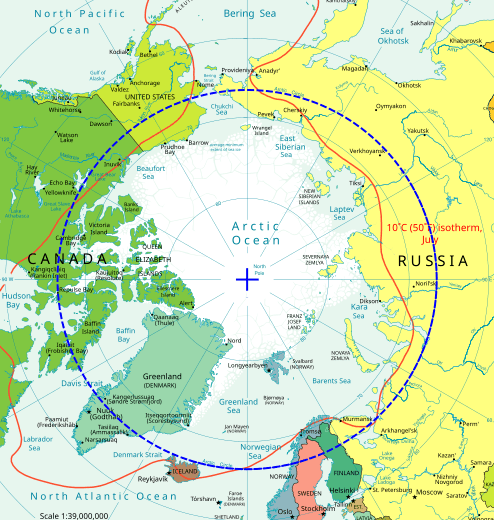
US IN TALKS FOR 3 NEW GREENLAND BASES; SOVEREIGN TERRITORY PROPOSAL FLOATED; GREENLAND PM CITES ‘PROGRESS’ IN TALKS; FOCUS ON ARCTIC SURVEILLANCE OF RUSSIA AND CHINA.
Conflict Spotlight: The Greenland “Working Group” | Arctic Expansion
Intelligence Status: ACTIVE NEGOTIATIONS / SOVEREIGNTY BUFFER
Theater: Southern Greenland / GIUK Gap
Date: May 12, 2026
High-level diplomatic negotiations are currently underway between Washington, Nuuk, and Copenhagen to establish a significantly expanded U.S. military footprint in the Arctic aa.com.tr. These “closely guarded” talks aim to defuse tensions following President Trump’s January 2026 threat to seize the island by force saudigazette.com.sa.
I. The “Three-Base” Surveillance Blueprint
The core of the proposal involves opening three new military bases in southern Greenland, strategically positioned to monitor the GIUK Gap (Greenland, Iceland, and the United Kingdom) jpost.com.
- Target Locations: One base is proposed for the site of the former U.S. military facility in Narsarsuaq, with others expected to utilize existing infrastructure like airfields and ports capable of being upgraded for maritime surveillance jpost.com.
- The “Sovereign Territory” Clause: In a move sparking regional debate, U.S. negotiators have floated an arrangement where these facilities would be designated as sovereign U.S. territory, moving beyond the shared-access framework of the current Pituffik (Thule) base aa.com.tr.
- Operational Focus: Unlike the existing missile-tracking station at Pituffik, these new southern sites will be configured for maritime surveillance, specifically monitoring Russian and Chinese submarine and surface vessel movements in the North Atlantic jpost.com.
II. Strategic Context: Defusing “The Hard Way”
The negotiations represent a shift from the administration’s early 2026 rhetoric. In January, President Trump asserted that the U.S. must “own” Greenland to prevent it from becoming a Russian or Chinese outpost, warning it could happen “the easy way or the hard way” saudigazette.com.sa.
- Greenland’s Stance: Prime Minister Jens-Frederik Nielsen, speaking at the Copenhagen Democracy Summit on Tuesday, noted that talks have “taken some steps in the right direction,” but emphasized that Greenland’s “only demand is respect” freemalaysiatoday.com.
- Danish Facilitation: Denmark’s Foreign Ministry confirmed the “ongoing diplomatic track,” utilizing the framework of the 1951 Defense Pact (updated in 2004), which allows Washington to ramp up installations provided it informs Nuuk and Copenhagen in advance aa.com.tr.
III. Factoid: Why Southern Greenland?
The GIUK Gap is the primary “chokepoint” for the Russian Northern Fleet to reach the open Atlantic. By establishing permanent radar and ISR (Intelligence, Surveillance, and Reconnaissance) assets in southern Greenland, the U.S. effectively creates a tripwire for “shadow fleets” and submarine maneuvers currently used by Russia and China to bypass Western oversight jpost.com.
WarsWW Intelligence Note [REF: ARCTIC-BASE-2026]
This “Working Group” represents a pivot toward Arctic Institutionalization. Rather than a hostile takeover, the U.S. is attempting to lease sovereignty through upgraded infrastructure. However, the designation of “Sovereign U.S. Territory” for these bases remains a significant “High Friction” point that could trigger nationalist pushback within Greenland or a counter-maneuver by Russia in the Barents Sea.
Image from Wikipedia.
Recent Comments