Technical Briefing: The AI Distillation Crisis
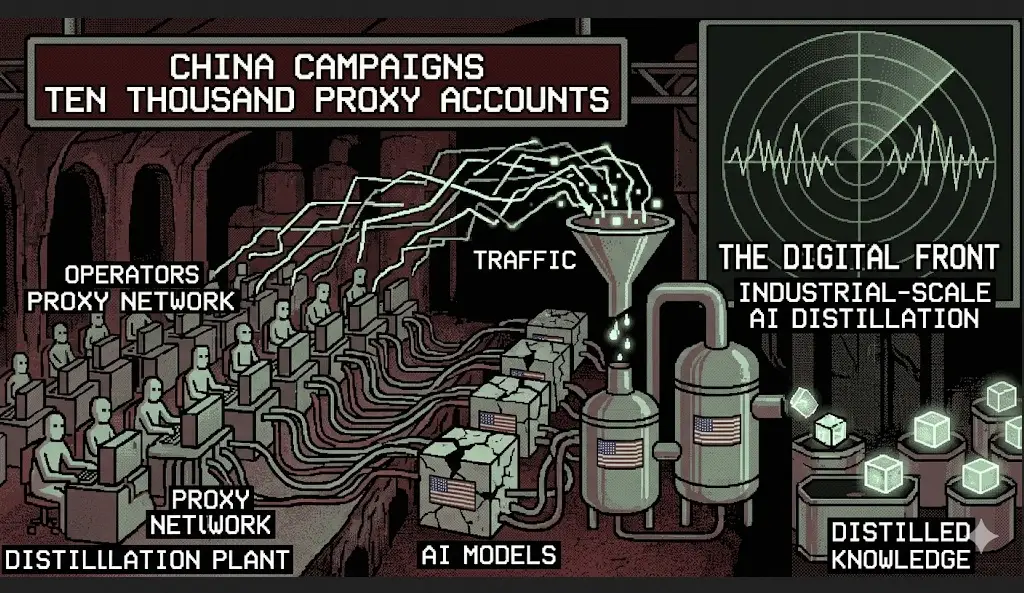
Technical Briefing: The AI Distillation Crisis
Date: April 24, 2026
Subject: Industrial-Scale Extraction of Frontier Models
Status: WHITE HOUSE DIRECTIVE ISSUED
In a sharply worded memorandum released yesterday, April 23, 2026, the White House Office of Science and Technology Policy (OSTP) formally accused Chinese entities of conducting “industrial-scale” theft of American AI intellectual property. This directive marks a critical escalation in the 2026 “Tech War,” specifically targeting the practice of unauthorized model distillation [[1.1]].
I. Understanding the Tactic: Distillation as Espionage
In legitimate machine learning, distillation is a standard technique used to compress a large “Teacher” model (like GPT-5 or Claude 4) into a smaller, faster “Student” model [[1.2]]. However, foreign adversaries are now using this process for Model Extraction Attacks.
- The Proxy Swarm: Entities primarily based in China are utilizing tens of thousands of proxy accounts (est. 24,000+) to bypass API rate limits and geofencing [[3.2]].
- The “Jailbreak” Extraction: By flooding American models with over 16 million specialized exchanges, these actors “jailbreak” the model’s internal logic, forcing it to reveal its proprietary reasoning patterns and foundational data weights [[1.2], [3.2]].
- Benchmark Simulation: These campaigns allow actors to release “knockoff” models that mimic the performance of U.S. frontier systems on key benchmarks at less than 1% of the original research cost [[2.1]].
II. Targeted Entities & Specific Breaches
While the White House memo does not name specific labs, it builds on evidence recently surfaced by the Frontier Model Forum [[3.2]]:
- DeepSeek: Accused of utilizing 150,000+ targeted exchanges to siphon logic from Claude (Anthropic) and GPT-series models (OpenAI) [[2.2]].
- MiniMax & Moonshot AI: Linked to a massive extraction campaign involving 13 million exchanges targeting agentic reasoning and computer vision capabilities [[3.2]].
- Security Stripping: Most alarmingly, the White House warns that distilled models are being stripped of “alignment” protocols—the safety guardrails that prevent AI from assisting in bioweapon development or offensive cyber operations [[1.2]].
III. The U.S. Response: “The Deterring Model Theft Act”
The Trump administration has outlined a four-pillar defense strategy to safeguard what it terms “the frontiers of American innovation” [[1.2]]:
- Intelligence Sharing: The U.S. will begin sharing tactical “threat signatures” of distillation attacks directly with private AI firms [[3.1]].
- The “Entity List” Threat: H.R. 8283 (introduced April 15, 2026) would place any foreign group found conducting industrial distillation on an export blacklist, cutting them off from U.S. hardware [[3.1]].
- Advanced Export Controls: Commerce Secretary Howard Lutnick signaled that future shipments of Nvidia B200/X100 chips may be halted if they are being used to power distillation farms [[1.1]].
Source Registry: AI Distillation Brief [REF: TECH-2026-0424]
| Ref ID | Primary Source | URL / Context |
| [[1.1]] | OSTP White House Memo (Apr 23, 2026) | White House Accuses China of Mass AI Distillation — The formal directive from Michael Kratsios. |
| [[1.2]] | NPR Illinois / AP News (Apr 24, 2026) | DeepSeek V4 Rollout & Extraction Allegations — Details on the “16 million exchanges” and the V4 launch today. |
| [[2.1]] | H.R. 8283 Legislative Summary | Deterring American AI Model Theft Act of 2026 — The bill introduced by Rep. Bill Huizenga on April 15, 2024. |
| [[3.2]] | Frontier Model Forum | Issue Brief: Adversarial Distillation — The technical definition of “Teacher-Student” model extraction attacks. |
The DeepSeek V4 Anchor: Since DeepSeek released V4 just hours ago (Friday, April 24, 2026), you can link to the AP News story as the “live evidence” of the distillation results. DeepSeek claims V4 matches GPT-5.2 performance [[4.1]].
The “Shadow Air Force” Parallel: Comparing this to the Myanmar Spotlight: “Just as low-cost drones neutralize expensive aircraft, low-cost distillation (costing <1% of the original research) is neutralizing the multi-billion dollar ‘moat’ of U.S. AI labs.”
[[4.1]] https://apnews.com/article/deepseek-ai-china-gpt-v4-d2ed33f2521917193616e061674d5f92
Senate Defeats Resolutions to Block Arms for Israel Amid Expanding 2026 Conflict
April 16, 2026: Legislative Summary
In a series of high-stakes floor votes late Wednesday, the U.S. Senate rejected two Joint Resolutions of Disapproval aimed at halting nearly $500 million in weapons transfers to the Israeli Defense Forces (IDF). The move secures the continuous flow of heavy ordnance and engineering equipment as U.S. and Israeli forces remain engaged in active hostilities against Iran and its regional proxies.
The Vote Breakdown
The resolutions, introduced by Senator Bernie Sanders (I-VT), targeted specific hardware that critics argue is being used for expansionist war policies in Gaza, Lebanon, and Iran.
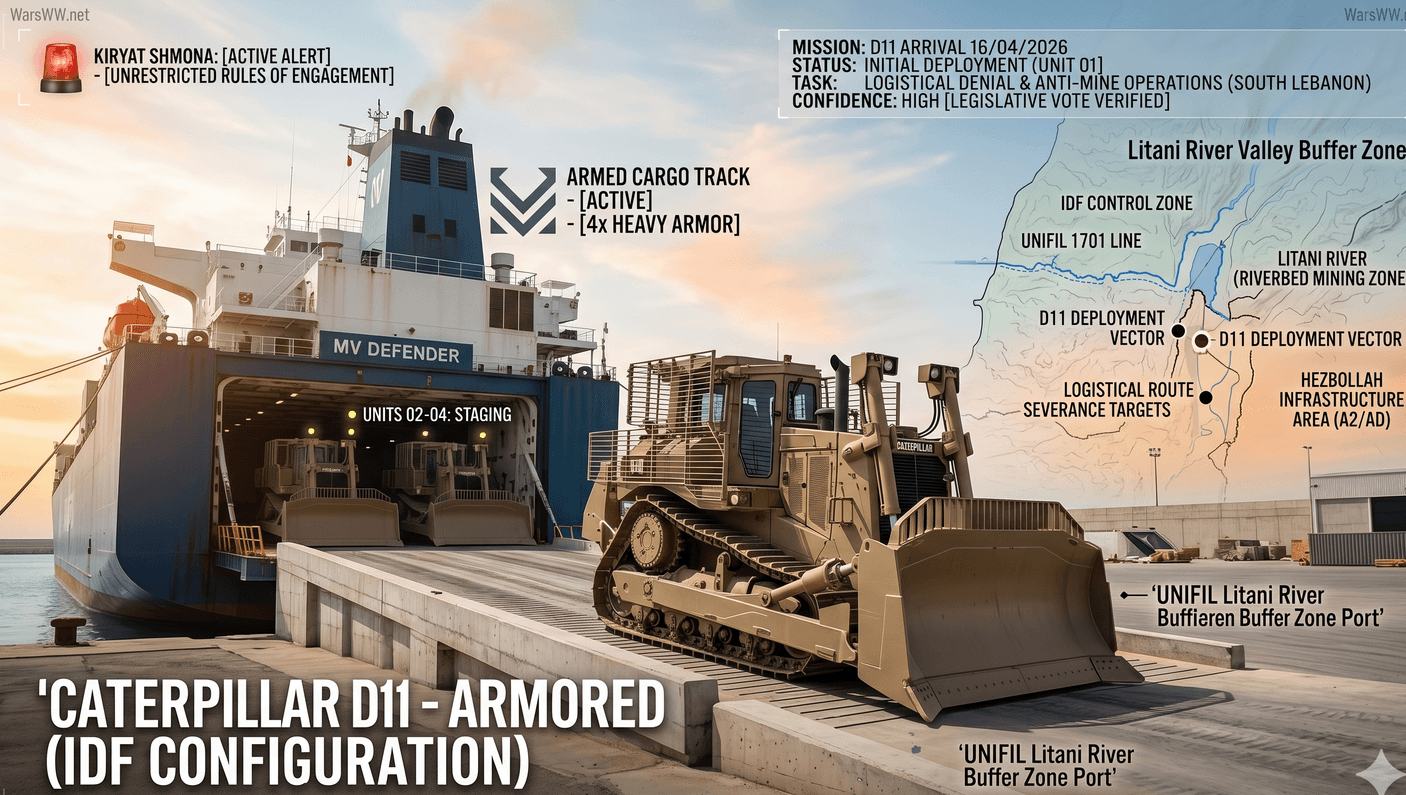
- S.J. Res. 32 (Armored Bulldozers): The $295 million sale was upheld by a 40–59 vote. While Senate Republicans unanimously backed the Trump administration’s position, seven Democrats—including Minority Leader Chuck Schumer and Sen. John Fetterman—joined them to ensure the sale proceeded.
- S.J. Res. 138 (1,000-Pound Bombs): The $151.8 million sale of heavy ordnance was upheld 36–63. This specific hardware has been a focal point of IAEA and international criticism regarding the scale of structural damage in urban Iranian and Lebanese centers.
The “Trump-Netanyahu” Strategic Alignment
The vote took place just hours after a separate War Powers resolution failed (47–52), which sought to end direct U.S. military involvement in the war against Iran.
- Republican Stance: Foreign Relations Chairman Jim Risch (R-ID) argued that blocking the sales would embolden Tehran and leave tens of thousands of Americans living in Israel vulnerable to further Iranian missile attacks.
- Democratic Shift: Despite the defeat, 80% of the Democratic caucus voted to block at least one sale—a doubling of support compared to similar 2024 measures. Sen. Mark Kelly (D-AZ) cited the “reckless decisions” of the Trump-Netanyahu administration as his primary reason for switching his vote to support the ban.
Tactical Implications
For the Northern Front (Israel-Hezbollah), the arrival of new armored bulldozers is critical for the IDF’s ongoing demolition of Hezbollah infrastructure within the Litani River buffer zone. Meanwhile, the 1,000-pound bombs are expected to be deployed as part of the counter-battery operations against Iranian-backed launch sites.
Recent Comments