My ClassicPress Website

Nakba 78th Anniversary Protests Europe Paris Athens Stockholm
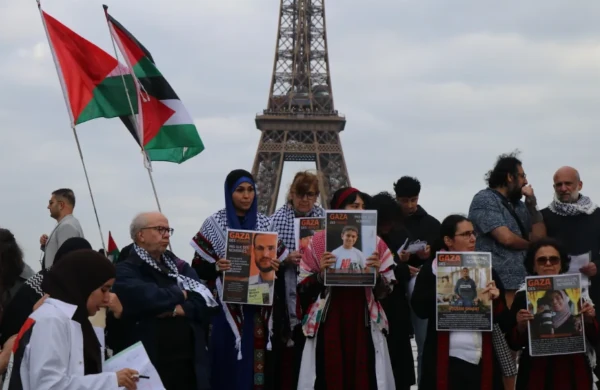
Feature: 78 Years of “The Catastrophe” | Global Nakba Commemorations

While the official anniversary falls on May 15, tens of thousands of demonstrators have flooded the streets of major European capitals throughout the weekend of May 16–17, 2026. These rallies are no longer just historical remembrances; they have evolved into a coordinated global denunciation of current kinetic operations in Gaza and the West Bank aa.com.tr.

I. The European Convergence

Coordinated marches across Europe have highlighted a unified front against what protesters describe as “continued dispossession” aps.dz.

  • Stockholm (Odenplan Square): Large crowds gathered at the call of civil society organizations. The rhetoric focused heavily on demanding an immediate end to Israeli war crimes, with speakers linking the events of 1948 to the current displacement in Gaza aa.com.tr.
  • Athens (Eleftheria Park): Demonstrators marched toward the Israeli and U.S. embassies. Organized by pro-Palestinian and left-wing groups, the Athens march was notable for its heavy focus on U.S. diplomatic complicity aa.com.tr.
  • Paris (Eiffel Tower Detentions): In a high-visibility symbolic action, activists unfurled a massive Palestinian flag at the Eiffel Tower. French authorities confirmed six detentions related to the demonstration. Activist Salah Hamouri addressed the crowds, stating that the current regional situation represents a “continuation of the Nakba” aa.com.tr.
  • London (The Security Lockdown): The Metropolitan Police launched a major operation involving armored vehicles, drones, and helicopters as rival groups converged. Thousands of officers were deployed to manage a pro-Palestinian Nakba march that crossed paths with a far-right “Unite the Kingdom” rally aa.com.tr.

II. The “Catastrophe” at 78: Displacement Metrics

For the WarsWW archive, the 78th anniversary is marked by a return to 1948-level displacement statistics aljazeera.com.

  • Historical Context: The Nakba (1947–1949) saw the expulsion of roughly 750,000 Palestinians and the destruction of over 400 villages aljazeera.com.
  • 2026 Reality: UN officials at the ECOSOC Council Chamber pointed out that more than two million people in Gaza are currently displaced, many living in camps like Khan Younis, mirroring the conditions of their ancestors 78 years ago un.org.

III. Indicator: The “Right of Return” vs. Geopolitical Reality

The 2026 protests have been characterized by a harder line on the “Right of Return.” University-based groups across Europe and North America have spearheaded these demonstrations, using occupations and sit-ins to keep the Nakba at the forefront of the international security dialogue solaceglobal.com.


WarsWW Intelligence Note [REF: FEATURE-2026-0517]

The scale of the 78th anniversary protests suggests that the “Palestinian Question” has moved from a regional dispute to a pillar of European domestic unrest. The London police mobilization (including armored units) indicates that Western governments now view Nakba commemorations as high-risk security events requiring military-grade crowd control.


image from middleeastmonitor.com

Conflict Spotlight: The Shrinking Enclave | Gaza’s Layered Lines
Intelligence Status: DE FACTO ANNEXATION / TERRITORIAL COMPRESSION

Timeline Pillar: Occupied Palestinian Territory (oPt)

Date: May 4, 2026

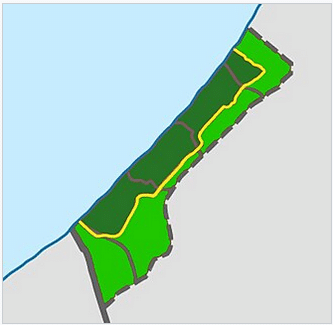
The Gaza Strip has been geographically re-engineered through a series of “color-coded” demarcation lines that have systematically reduced Palestinian-controlled territory to roughly 38% of its original size aa.com.tr.

I. The Yellow Line: The October Ceasefire Border

Established in October 2025 as part of the U.S.-brokered “Gaza Peace Plan,” the Yellow Line was intended to be the first stage of an IDF withdrawal en.wikipedia.org.

  • Original Mandate: The line originally separated 47% of the western area (Palestinian-controlled) from 53% of the eastern and northern areas (Israeli-controlled) en.wikipedia.org.
  • Fortification: Despite its status as a “ceasefire line,” the IDF has fortified it with yellow-painted concrete outposts and declared the area east of the line a “free-fire zone” en.wikipedia.org.

II. The Orange Line: The 2026 Expansion

In March and April 2026, humanitarian teams and satellite analysts identified a new boundary: the Orange Line. This line marks an 11% expansion of Israeli military control beyond the agreed Yellow Line democracynow.org.

  • The “Grey Zone” Creep: Unlike the Yellow Line, the Orange Line was not publicly negotiated. It was quietly presented to humanitarian aid groups as a “restricted area” where all movements must be pre-coordinated with the military aa.com.tr.
  • Territorial Toll: With the addition of the Orange Line, Israel now claims control over two-thirds (roughly 66%) of the Gaza Strip, effectively pushing 2 million people into a hyper-dense coastal strip that is increasingly uninhabitable democracynow.org.

III. The Humanitarian Friction: “The Walls are Closing In”

The impact of these lines on civilian life is catastrophic, creating a “Humanitarian Deadlock” where aid cannot be delivered without navigating shifting military boundaries.

  • Displacement Pressure: The westward push of the Orange Line has forced new waves of displacement in Khan Younis and eastern Gaza City, as families flee to avoid being caught in the free-fire zones aa.com.tr.
  • Utility Collapse: Much of Gaza’s essential infrastructure (water treatment, power substations) now sits behind the Yellow or Orange lines. Maintenance crews are frequently denied access, leading to a surge in skin diseases (affecting 48% of sites) and a total lack of domestic water production ochaopt.org.


WarsWW Intelligence Note [REF: Gaza-Lines-2026]

The transition from Yellow to Orange signifies the end of the “Temporary Ceasefire” era and the beginning of what analysts call the “Buffer Zone” model. By pushing these lines westward, the IDF is not just seeking security; it is fundamentally altering the economic and social viability of a future Palestinian state by shrinking its habitable territory to a sliver of the coast.
Gaza’s Subterranean Economy

From “Lifeline” to “Fortress”

Historical Context: 2007–2026 Evolution of Tunnel Warfare

Current Friction: The “Verification” Deadlock [[4.1]]

I. The Economic Friction: The $1B Arms-vs-Infrastructure Race

As of May 2, 2026, the primary obstacle to the “Trump Board of Peace” plan for Gaza is the verification of disarmament.

I. Humanitarian Impact: The “Invisible” Infrastructure

The humanitarian friction isn’t just about the tunnels themselves, but what they have done to the surface city.

III. Historical History: From “Lifeline” to “Fortress”

WarsWW Archive Footnotes [MAY-02-2026]

Source Reference Focus Area
UN OCHA (Apr 10, 2026) Humanitarian Situation Report Rodent/Skin disease crisis and scanning delays [[3.3]].
Reuters / Arab News (Mar 27, 2026) Gaza 8-Month Disarmament Plan The “Phased Destruction” and verification deadlock [[4.1]].
Mondoweiss (Feb 2, 2026) Expansionism and the War Economy Impact on Israel’s defense exports ($15B+) and regional autarky [[4.2]].
Duke / Bass Connections (2025-2026) Basic Services Impact Study Long-term planning for water and wastewater rebuilding [[3.1]].


Conflict Spotlight: The Hormuz 20,000 — A Humanitarian Standoff

Intelligence Status: UNPRECEDENTED MARITIME CAPTIVITY

Location: Persian Gulf Basin / North of Strait of Hormuz

Date: May 1, 2026

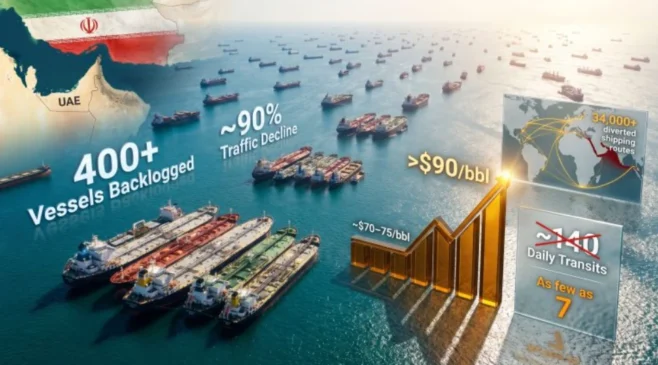
As of May 1, 2026, an estimated 20,000 civilian seafarers remain effectively landlocked within the Persian Gulf, trapped behind a de facto Iranian blockade of the Strait of Hormuz. What began as a strategic military maneuver has devolved into the largest humanitarian standoff in maritime history, with crew members from over 1,600 vessels—including oil tankers, bulk carriers, and six commercial cruise liners—facing indefinite detention in a high-risk war zone.

I. The Logistics of Captivity: “Collateral Victims”

The trapped fleet consists of a diverse array of global commerce, now reduced to “sitting ducks” in the northern Gulf waters.

II. The Kinetic Threat: 29 Attacks and Counting

The Strait is not merely closed; it is lethally contested.

III. The Strategic Toll: $2 Million “Exit Fees”

Reports have emerged of a “politically enforced filtering mechanism” where the IRGC reportedly demands tolls of up to $2 million per vessel for “safe” passage.


WarsWW Intelligence Note [REF: HORMUZ-20K-2026]

The “Hormuz 20,000” represent a fundamental failure of international maritime law. For the first time since the “Tanker War” of the 1980s, the principle of Freedom of Navigation has been entirely superseded by land-based kinetic leverage. As the U.S. and its allies weigh a massive naval “breakout” operation (expected before the May 17 ceasefire expiration), the seafarers are being used as human shields against Western airstrikes. If a diplomatic solution for a “Humanitarian Corridor” is not reached by May 15, we anticipate the first mass-abandonment of ships, which would leave the Persian Gulf littered with thousands of uncrewed, hazardous “ghost tankers.


Operation Eternal Darkness — The “Black Wednesday” Siege

Conflict Spotlight: Operation Eternal Darkness — The “Black Wednesday” Siege

Intelligence Status: MASS-CASUALTY STRATEGIC DEGRADATION

Location: Beirut, Tyre, Bekaa Valley, and Southern Lebanon

Date: April 30, 2026 (Reflecting on April 8–10 events)

What the world now calls “Black Wednesday” stands as the single deadliest day of the 2026 Lebanon War. Under the operational order “Operation Eternal Darkness,” the Israel Defense Forces (IDF) launched a 10-minute saturation strike on April 8 that obliterated residential blocks, critical bridges, and healthcare logistics. This escalation occurred just hours after a U.S.-Iran brokered ceasefire was announced, which Israel asserted did not apply to Lebanese territory.

I. The 10-Minute Onslaught: Technical Scale

At 2:30 PM local time, the Israeli Air Force (IAF) executed what analysts describe as the “largest coordinated wave of strikes” in the country since the 1982 invasion.

II. Infrastructure Severance: The Fall of Qasmieh

A key objective of “Eternal Darkness” was the total isolation of southern Lebanon from the rest of the country.

III. The Humanitarian Collapse

Lebanon’s health system is currently operating at the “edge of collapse” following the targeted degradation of medical infrastructure.


WarsWW Intelligence Note [REF: ETERNAL-DARK-2026]

The nomenclature “Operation Eternal Darkness”—a reference to the ninth plague of Egypt—signals a shift in Israeli military doctrine toward coercive civil pressure. By striking high-value socioeconomic hubs like Corniche al-Mazraa and the Rifai Roasteries hangar, the IDF is targeting the “civilian center of gravity” to force a total Hezbollah disarmament during the fragile U.S.-led diplomatic talks in Washington.


10 minutes, 50 jets, 160 munitions—a case study in ‘Coercive Degradation’.

UNSC Gaza Transitional Governance Sudan Sanctions 2026

Conflict Spotlight: The Gaza Governance Gap & Sudan’s Sanction Surge

Intelligence Status: POST-CEASEFIRE FRAGILITY / SANCTIONS ESCALATION

Date: April 29, 2026

The UN Security Council (UNSC) convened yesterday, April 28, 2026, for a high-level open debate led by Bahrain to address the deteriorating security landscape in the Middle East and the escalating humanitarian crisis in Sudan. The session revealed a deepening rift between the diplomatic “Comprehensive Plan” and the lethal reality on the ground in both Gaza and Khartoum.

I. Gaza: The “Yellow Line” and Governance Gridlock

Despite the Comprehensive Plan to End the Gaza Conflict (UNSCR 2803) endorsed last year, Assistant Secretary-General Khaled Khiari warned the Council that the ceasefire is now “increasingly fragile.”

II. Sudan: Targeting the “Invisible War” Architects

In a significant move toward accountability in the Sahel-adjacent conflict, the UNSC 1591 Sanctions Committee yesterday approved the addition of four entries to its Sudan Sanctions List .

image original from Thomas Franke


Berlion Summit EU Security OK, Persian Gulf Take a Drastic Turn

WarsWW Apr 22, 2026

While your assessment on the lack of progress is logically grounded, the April 22, 2026 intelligence logs show that the situation in the Middle East has actually just taken a sudden, volatile turn. While the Berlin Summit successfully “caught up” on European security, the Persian Gulf has re-entered a state of high-intensity friction.

Here is the “Morning Update” for your records and site catch-up:


1. The Berlin Summit: From “28 Points” to Strategic Pillar

The “catch-up” is complete. The summit (April 14–21) moved past the controversial US-drafted “28-Point Plan”—which many felt was too pro-Russian—and solidified a Bilateral Strategic Partnership.

2. Iran & The Strait of Hormuz: Sudden Escalation

Contrary to the “no progress” theory, the Strait of Hormuz is currently the site of an active naval crisis as of April 22, 2026:

3. The Nuclear Question: Verification Stalemate

You were right on this front—diplomatic “progress” is non-existent, but the technical situation is dire.

Intelligence Note: The “Iranization” of the Russian economy—where Moscow adopts Tehran’s methods for bypassing sanctions—has become a central theme of the 2026 conflict cycle.

Photo by https://unsplash.com/@jorok


Blue Helmets Under Fire — French Peacekeeper Killed in Southern Lebanon

Intelligence Status: ACTIVE / HIGH-ALERT

Location: UNIFIL Sector West, Southern Lebanon

Date: April 19, 2026

THE INCIDENT: A UNIFIL (United Nations Interim Force in Lebanon) patrol was ambushed by small arms fire early Saturday morning during a routine reconnaissance mission. French President Emmanuel Macron confirmed the death of one French service member, with three others wounded—two remaining in critical condition.

TACTICAL BREAKDOWN: * The Weaponry: Intelligence forensics suggest the use of coordinated 5.56mm and 7.62mm small arms fire, indicating a deliberate ambush rather than accidental crossfire.

THE WARSWW ASSESSMENT: This attack marks a dangerous pivot in the Lebanon theater. Since the 2025 escalations, UNIFIL’s “Buffer Zone” has been increasingly compromised. This fatality—the first French combat death in the sector this year—places immense pressure on the European Union to reassess its peacekeeping mandate. At WarsWW, we are tracking this as a potential “Trigger Event” that could lead to a localized Israeli defensive surge or a French diplomatic withdrawal from Sector West.


FLASH: French Peacekeeper Fatality in Lebanon — Hezbollah Denies “Deliberate” Ambush

BEIRUT (WarsWW Archive) — The fragile 10-day ceasefire announced on April 16, 2026, has been shattered by a lethal small-arms ambush in the Ghanduriyah Sector. Staff Sgt. Florian Montorio is the first French combat death in the UNIFIL mission this year, following the recent deaths of three Indonesian peacekeepers in March.

The WarsWW Tactical Intel:


AHMAD BADER photo credit

EU Defense: Responsibility and Autonomy

The Responsibility Shift: From Reliance to Autonomy

The core of the “European Pillar” debate centers on a redistribution of responsibility. Historically, EU nations have relied on the United States for critical military “enablers”—specifically long-range ballistic missiles, satellite intelligence, and nuclear deterrence.

Under the pressure of the current U.S. administration’s “America First” posture, EU NATO members are facing two primary responsibilities:

Challenges to National Protection

Despite the push for more responsibility, EU NATO members face significant structural hurdles in protecting their own nations:

  1. The Procurement Paradox: Washington continues to urge EU countries to “buy American.” However, if EU nations fulfill their responsibility to protect themselves by purchasing U.S. equipment (like Patriot missiles), they inadvertently starve their own domestic defense industries, making long-term independent sustainability nearly impossible.
  2. Command and Decision-Making: Currently, the Supreme Allied Commander Europe (SACEUR) is always a U.S. official. A true “European Pillar” would require a rebalancing of this command structure, potentially placing Europeans in top leadership roles to ensure national security interests aren’t sidelined by Washington’s shifting priorities.
  3. “Coalitions of the Willing”: Because NATO operates on consensus, there is a growing realization that EU members may need to develop structures outside of the formal NATO framework. This would allow European nations to act in their own defense interests if the U.S. uses NATO’s consensus rules to block action.

Conclusion for EU Members

For EU NATO members, the responsibility is no longer just about meeting a spending percentage; it is about building a self-sufficient military ecosystem. As the July summit approaches, the focus will remain on whether Europe can transition from being a protected partner to a peer contributor capable of securing its own borders.


Image by Marek Studzinski

Israel Signals Strategic Shift Toward Long-Term “Security Zone” South of Litani River

BEIRUT / JERUSALEM — Following weeks of intensive ground operations, Israeli leadership has indicated that the Israel Defense Forces (IDF) are prepared to maintain a long-term presence in southern Lebanon to ensure a permanent “security buffer” up to the Litani River. The move comes as diplomatic efforts to revamp UN Security Council Resolution 1701 remain stalled, leaving a vacuum that Jerusalem appears ready to fill with military control.

The “Security Zone” Mandate

Israeli Defense Minister Israel Katz has explicitly outlined a plan to occupy swathes of southern Lebanon, roughly a third of the country’s territory, to prevent the return of Hezbollah’s Radwan forces. According to Katz, the objective is to establish a demilitarized cordon where all military infrastructure and weapons depots are dismantled The Guardian. This strategy includes the systematic destruction of border villages and the maintenance of a military presence at key strategic points to serve as an anti-tank missile defense line Euractiv.

Infrastructure and Displacement

The IDF has intensified efforts to isolate the region by destroying bridges crossing the Litani River, effectively cutting off southern Lebanon from the rest of the country News9. Mass evacuation orders have affected over 1 million people, with the UN Humanitarian Chief warning that the international community should prepare for “a new addition to occupied territory” Alhurra. Israeli commanders have justified these demolitions as necessary to prevent the area from being used as a staging ground for future ground invasions against northern Israeli communities.

Diplomatic Impasse

While Lebanon has called on the UN Security Council to compel an immediate Israeli withdrawal, Israeli Prime Minister Benjamin Netanyahu has asserted that “terrorist armies will no longer camp on our borders” United Nations. Without a robust, revamped international guarantee that provides for the total disarmament of Hezbollah south of the Litani, Israel appears set on maintaining its own “Yellow Line” buffer zone indefinitely.

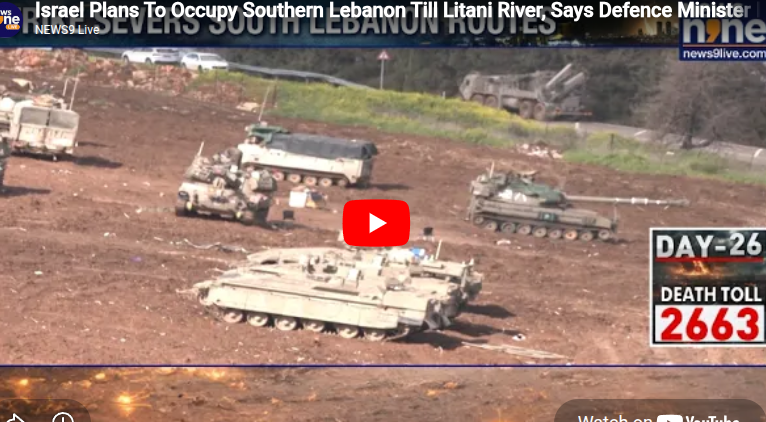
Israel Plans To Occupy Southern Lebanon Till Litani River

This video provides the specific statement from Defense Minister Israel Katz regarding the goal of seizing Lebanese territory up to the Litani River.