WarsWW Spotlight: The Su-57D “Felon” Twin-Seat Drone Buster
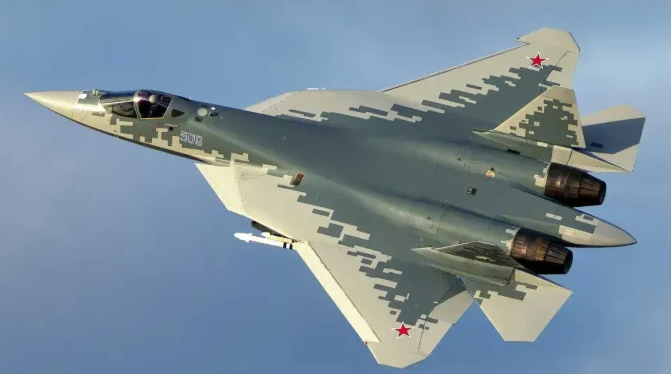
WarsWW Spotlight: The Su-57D “Felon” Twin-Seat Drone Buster [REF: VKS-SU57D-2026]
The Russian Aerospace Forces (VKS) have officially introduced a radical paradigm shift in fifth-generation aviation. On May 19, 2026, the Sukhoi Su-57D “Felon” completed its highly anticipated maiden flight, transitioning the platform from a standalone stealth fighter into a dedicated airborne battle management hub designed specifically to counter and control unmanned systems.
[SU-57D “FELON” COCKPIT ARCHITECTURE]
┌────────────────────────────────────────────────────────┐
│ [Pilot – Front Seat] │ [Mission Commander – Rear]│
├───────────────────────────┼────────────────────────────┤
│ – Flight Controls │ – MUM-T AI Drone Link │
│ – 360° Radar Monitoring │ – EW Interception Node │
│ – Supersonic Supercruise │ – “Okhotnik” FPV Guidance │
└───────────────────────────┴────────────────────────────┘
I. The Tandem Architecture: Why Two Seats Matter
The most striking feature of the newly unveiled Su-57D variant is its elongated tandem cockpit canopy, making it only the second fifth-generation stealth fighter in the world to adopt a two-seat configuration after China’s Chengdu J-20S.
- The Manned-Unmanned Teaming (MUM-T) Core: Western aerospace analysts note that adding a second crew member is entirely driven by the staggering cognitive load of modern drone warfare. The rear seat houses a dedicated mission commander who acts as a network-centric command post to coordinate loyal wingman drones.
- The “Okhotnik” Conductor: The rear cockpit is structurally optimized to control heavy combat stealth drones, specifically the S-70 Okhotnik. From the backseat, the commander can direct multiple autonomous strike platforms, creating a forward radar and ordnance screen well ahead of the manned jet.
II. Technical Specifications & Combat Roles
The United Aircraft Corporation (UAC) has built the Su-57D to act as an Apex Predator over contested airspace, though the addition of a second seat forces distinct design tradeoffs.
- Performance Thresholds: The aircraft retains its dual afterburning turbofans, achieving a maximum speed of Mach 2.0 and sustaining supersonic supercruise without relying on fuel-heavy afterburners. However, analysts warn that the expanded cockpit inevitably reduces internal fuel capacity, slightly dinging its maximum clean subsonic range.
- The Sensor Canopy: The platform utilizes an integrated Sh121 Byelka AESA radar system paired with side-looking arrays to achieve 360-degree radar coverage out to 248 miles (400 km). This massive radar footprint allows the “Drone Buster” to track hundreds of low-flying, low-RCS kamikaze drones simultaneously.
- Ordnance Configuration: For drone interception and deep-strike protection, the main internal tandem bays are configured to carry multi-jet formation weapons packages, including long-range R-77M air-to-air missiles alongside stealthy Kh-69 cruise missiles.
III. Urgent Context: Industrial Scramble After Shagol Airbase
The rollout of the Su-57D comes at a moment of acute vulnerability for Russia’s stealth program. Just weeks ago, on April 25, 2026, Ukraine’s Unmanned Systems Forces executed a devastating 1,700 km deep-rear kamikaze drone strike on the Shagol Airfield in Chelyabinsk, where several baseline Su-57s were parked.
- The Recovery Effort: Satellite imagery confirmed that at least two baseline Su-57s were damaged in the attack, dealing a severe blow to a fleet that numbers fewer than 30 operational units.
- The Factory Push: In response to the Shagol disaster, the KnAAZ assembly plant in Komsomolsk-on-Amur has accelerated production by integrating robotic manufacturing systems, rushing the two-seat Su-57D from the testing hangar directly into the spotlight to project electronic warfare dominance and protect the remaining fleet from further asymmetrical drone strikes.
WarsWW Intelligence Note [REF: SU57D-AERIAL-0520]
The Su-57D “Felon” is the Kremlin’s direct technological answer to its current air defense vulnerabilities. Unable to stop low-altitude Ukrainian drone swarms with ground-based S-400 batteries alone, Moscow is shifting the fight to the sky. By placing a flying drone command post at Mach 2, the VKS hopes to use the Su-57D to intercept incoming UAVs at long range before they can threaten critical mainland targets again.
image from: https://www.flyajetfighter.com
Estonia Intelligence Russia Military Limits Ukraine Internet Crackdown Backlash 2026
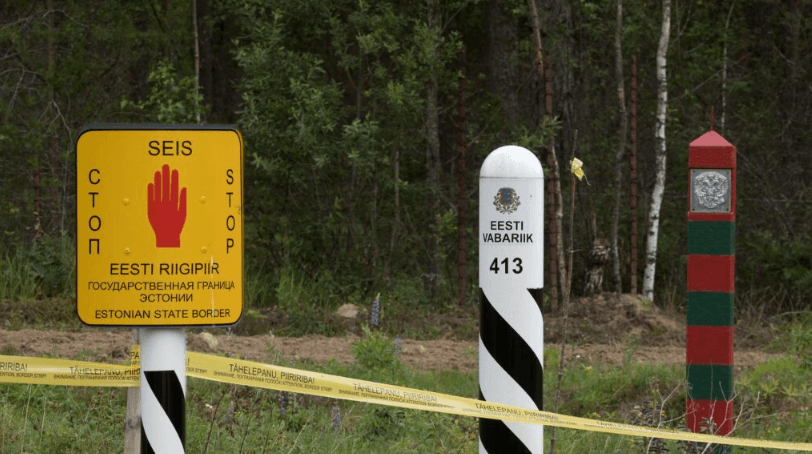
WarsWW Intelligence Note: The “Cracked” Kremlin [REF: EST-INT-2026]
ESTONIA INTEL: NO RUSSIAN ATTACK ON NATO EXPECTED IN 2026; KREMLIN FACES BACKLASH OVER INTERNET BANS; RUSSIAN MILITARY COMMUNICATION DEGRADES AFTER STARLINK CUTOFF.
As the full-scale invasion of Ukraine enters its fifth year, a landmark assessment from Northern Europe suggests that the Kremlin’s expansionist reach has hit a physical and domestic limit. The Estonian Foreign Intelligence Service (EFIS) concludes that Russia currently has no intention of militarily attacking Estonia or any other NATO member in 2026, as its military remains fully occupied in its pursuit of Ukraine’s complete subjugation.
I. The Exhaustion of the “Soviet Inheritance”
The primary constraint on Russian aggression elsewhere is the sheer scale of its losses in the Ukrainian theater.
- Force Depletion: In roughly four years of fighting, Russia has exhausted most of the military stockpiles inherited from the Soviet Union.
- The Million-Man Toll: Intelligence estimates suggest Moscow has lost around one million soldiers killed or severely injured at the front since February 2022.
- Calculated Deterrence: Tallinn assesses that the Kremlin is compelled to calculate very carefully what it can risk attempting, as NATO’s reinforced presence on the Eastern Flank has made an attack on the Baltics a non-viable strategic move while the Ukrainian front remains active.
II. Internal Pressure: The Starlink Breakdown & Communications Collapse
The Kremlin is grappling with brewing internal military pressure following a series of battlefield failures in April and May 2026.
- The “Starlink Gap”: After SpaceX cut the Russian military’s illicit access to the Starlink satellite system earlier this year, Russian command and control has degraded significantly.
- Tactical Paralysis: Reports indicate that Russian commanders on the southern front were forced to rely on inaccurate maps and exaggerated gains, leading to clusters of troops being deployed to forward positions without adequate coordination. This communications denial has allowed Ukrainian forces to advance 10-12 kilometers in key sectors.
III. Domestic Friction: Crackdowns, Taxes, and Inflation
Beyond the battlefield, the Russian state is facing a “sovereignization” crisis that is alienating its own populace.
- The “Great Firewall” Backlash: Public dissatisfaction has surged following an unpopular internet crackdown that included the large-scale disruption of Telegram, WhatsApp, and YouTube. In March 2026 alone, VPN downloads increased 14-fold as citizens sought to bypass the “whitelists” imposed by the FSB.
- Fiscal Burden: As the war drags on, ordinary Russians are being hit by increased fiscal burdens and cuts in social spending. Support for continuing the invasion fell to a record-low of 25% in February 2026, according to independent sociologists.
- Macroeconomic Decay: Rising taxes and persistent inflation have fueled social frustration, with the EFIS warning that the risk of economic and social instability in Russia is expected to rise sharply throughout 2026.
WarsWW Intelligence Note [REF: RU-LIMITS-2026]
The Kremlin is trapped in a period of sustained confrontation that it can no longer afford to expand. While Russia remains a long-term threat to European security, the “omnipresent hand” of the Kremlin is being slowed by the weight of its own failures. For now, the “Special Path” has become a road of domestic and military attrition.
image from https://estonianworld.com/

![Detailed technical infographic schematic of the Russian RS-28 Sarmat ICBM. Panels diagram the silo launch and shortened boost phase [[1.4]]; the unlimited operational range via polar trajectory [[1.1]]; and the Avangard HGV/MIRV payload options, highlighting a 50 Megaton yield](https://tradesnet.us/wp-content/uploads/2026/05/Russian-ICBM-Sarmat-1.webp)


Recent Comments