WarsWW Spotlight: The Su-57D “Felon” Twin-Seat Drone Buster
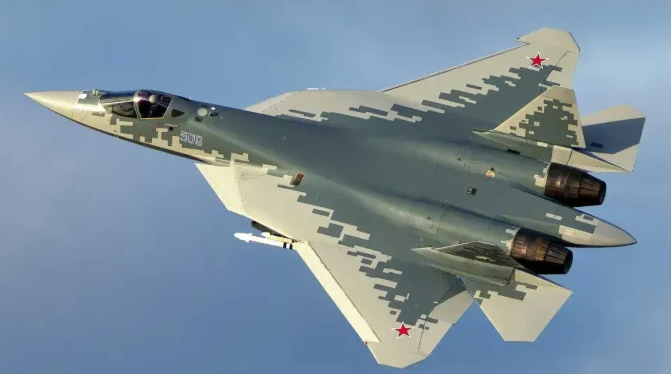
WarsWW Spotlight: The Su-57D “Felon” Twin-Seat Drone Buster [REF: VKS-SU57D-2026]
The Russian Aerospace Forces (VKS) have officially introduced a radical paradigm shift in fifth-generation aviation. On May 19, 2026, the Sukhoi Su-57D “Felon” completed its highly anticipated maiden flight, transitioning the platform from a standalone stealth fighter into a dedicated airborne battle management hub designed specifically to counter and control unmanned systems.
[SU-57D “FELON” COCKPIT ARCHITECTURE]
┌────────────────────────────────────────────────────────┐
│ [Pilot – Front Seat] │ [Mission Commander – Rear]│
├───────────────────────────┼────────────────────────────┤
│ – Flight Controls │ – MUM-T AI Drone Link │
│ – 360° Radar Monitoring │ – EW Interception Node │
│ – Supersonic Supercruise │ – “Okhotnik” FPV Guidance │
└───────────────────────────┴────────────────────────────┘
I. The Tandem Architecture: Why Two Seats Matter
The most striking feature of the newly unveiled Su-57D variant is its elongated tandem cockpit canopy, making it only the second fifth-generation stealth fighter in the world to adopt a two-seat configuration after China’s Chengdu J-20S.
- The Manned-Unmanned Teaming (MUM-T) Core: Western aerospace analysts note that adding a second crew member is entirely driven by the staggering cognitive load of modern drone warfare. The rear seat houses a dedicated mission commander who acts as a network-centric command post to coordinate loyal wingman drones.
- The “Okhotnik” Conductor: The rear cockpit is structurally optimized to control heavy combat stealth drones, specifically the S-70 Okhotnik. From the backseat, the commander can direct multiple autonomous strike platforms, creating a forward radar and ordnance screen well ahead of the manned jet.
II. Technical Specifications & Combat Roles
The United Aircraft Corporation (UAC) has built the Su-57D to act as an Apex Predator over contested airspace, though the addition of a second seat forces distinct design tradeoffs.
- Performance Thresholds: The aircraft retains its dual afterburning turbofans, achieving a maximum speed of Mach 2.0 and sustaining supersonic supercruise without relying on fuel-heavy afterburners. However, analysts warn that the expanded cockpit inevitably reduces internal fuel capacity, slightly dinging its maximum clean subsonic range.
- The Sensor Canopy: The platform utilizes an integrated Sh121 Byelka AESA radar system paired with side-looking arrays to achieve 360-degree radar coverage out to 248 miles (400 km). This massive radar footprint allows the “Drone Buster” to track hundreds of low-flying, low-RCS kamikaze drones simultaneously.
- Ordnance Configuration: For drone interception and deep-strike protection, the main internal tandem bays are configured to carry multi-jet formation weapons packages, including long-range R-77M air-to-air missiles alongside stealthy Kh-69 cruise missiles.
III. Urgent Context: Industrial Scramble After Shagol Airbase
The rollout of the Su-57D comes at a moment of acute vulnerability for Russia’s stealth program. Just weeks ago, on April 25, 2026, Ukraine’s Unmanned Systems Forces executed a devastating 1,700 km deep-rear kamikaze drone strike on the Shagol Airfield in Chelyabinsk, where several baseline Su-57s were parked.
- The Recovery Effort: Satellite imagery confirmed that at least two baseline Su-57s were damaged in the attack, dealing a severe blow to a fleet that numbers fewer than 30 operational units.
- The Factory Push: In response to the Shagol disaster, the KnAAZ assembly plant in Komsomolsk-on-Amur has accelerated production by integrating robotic manufacturing systems, rushing the two-seat Su-57D from the testing hangar directly into the spotlight to project electronic warfare dominance and protect the remaining fleet from further asymmetrical drone strikes.
WarsWW Intelligence Note [REF: SU57D-AERIAL-0520]
The Su-57D “Felon” is the Kremlin’s direct technological answer to its current air defense vulnerabilities. Unable to stop low-altitude Ukrainian drone swarms with ground-based S-400 batteries alone, Moscow is shifting the fight to the sky. By placing a flying drone command post at Mach 2, the VKS hopes to use the Su-57D to intercept incoming UAVs at long range before they can threaten critical mainland targets again.
image from: https://www.flyajetfighter.com