Ukraine Middle Strikes | Moscow Refinery | May 20, 2026
WarsWW Daily Brief | May 20, 2026
Intelligence Status: RE-ROUTED LOGISTICS / OPERATIONAL DEPTH INTERDICTION
Global Security Index: 9.8/10 (Severe Market Rupture)
I. Eastern Europe: The “Decisive” Pivot to Middle-Range Strikes
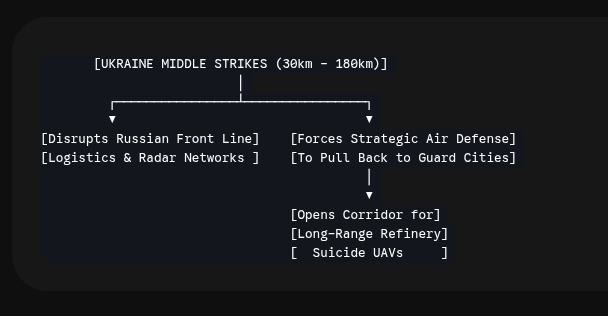
The nature of the Ukraine-Russia air war has structurally shifted. According to battlefield commanders, Ukraine has vastly scaled up and quadrupled its “middle-strike” capabilities since February, focusing on targets 30km to 180km behind frontlines to bleed Russian logistics at operational depth.
- The Moscow Blindspots: Following a massive wave of nearly 600 drones that killed at least four people in the Moscow capital region, localized data reveals targeted panic. Direct hits disrupted the heavily defended Moscow Oil Refinery in Kapotnya and crippled microelectronic defense plants like Angstrem in Zelenograd while local anti-terrorism commissions censor resident chat groups.
- Dispersing the Shield: Military analysts report that these deep incursions have successfully forced Russia to pull air defense assets away from the frontlines to protect domestic infrastructure, leaving rear supply depots exposed.
- The Baltic Leak: The intense jamming environment has created peripheral crises. Multiple stray Ukrainian drones entered the airspace of NATO members Estonia, Latvia, and Finland this week, blinded by Russian electronic warfare (EW) countermeasures while chasing Baltic Sea supply hubs.
       [UKRAINE MIDDLE STRIKES (30km - 180km)]
                          │
         ┌────────────────┴────────────────┐
         ▼                                 ▼
[Disrupts Russian Front Line]    [Forces Strategic Air Defense]
[Logistics & Radar Networks ]    [To Pull Back to Guard Cities]
                                           │
                                           ▼
                                 [Opens Corridor for]
                                 [Long-Range Refinery]
                                 [  Suicide UAVs     ]
II. Global Economics: The Trade-Off of the Hormuz Blockade
The U.S.-Israeli kinetic escalation against Iran has triggered a cascading crisis in Western economic policy, forcing a quiet re-evaluation of current secondary sanctions.
- The Sanctions Fracture: With the Strait of Hormuz effectively closed to traffic, global fuel prices have surged exponentially. In a surprise maneuver to protect domestic cost-of-living indices, the UK government quietly watered down sanctions on Russian oil.
- The Technical Loophole: The newly enacted trade license permits the import of Russian crude oil provided it has been refined into jet fuel or diesel in third-party neutral countries like India or Turkey.
- Domestic Backlash: The U.S. Treasury has similarly extended 30-day sanctions waivers for transit shipments at sea, drawing fierce domestic criticism from parliamentary oversight committees who argue the policies compromise long-term pressure campaigns against Moscow.
III. Kremlin Attrition: Personnel and Tactical Realities
- The Recruitment Drought: Ukrainian Foreign Intelligence confirms that the Russian Ministry of Defense concluded only 70,500 military contracts in Q1 2026. This falls significantly below the minimum Kremlin quotas needed to replenish casualties, despite the Duma passing aggressive laws forgiving all overdue consumer loans for frontline volunteers.
- The “China-trained” Footprint: Intelligence agencies have tracked approximately 200 Russian military personnel who covertly trained inside PLA facilities in Beijing and Nanjing returning to active deployment to optimize unmanned drone doctrine on the Kharkiv axis.
IV. Indicators to Watch
- [NUCLEAR ANCHOR] Early Drills: Russia’s surprise activation of joint tactical nuclear weapons exercises with Belarus this week is assessed as an informational operation to deter NATO involvement following the Baltic drone incursions.
- [ENERGY COMMERCE] The Third-Party Pipeline: Watch the import volumes of Indian and Turkish refined products into the EU over the next 14 days to gauge the true extent of the Russian oil baseline relief.
WarsWW Intelligence Note [REF: DAILY-2026-0520]
The global geopolitical theater is experiencing an ironic inversion. Ukraine’s specialized “middle strikes” are successfully choking off Russian oil refining infrastructure at home, yet the simultaneous conflict in Iran has forced Ukraine’s closest Western allies to turn a blind eye to third-party Russian oil imports just to stabilize their own domestic energy grids.