My ClassicPress Website

PGSA Strait Of Hormuz Permit Toll | Refinery Drone Strike May 21 2026
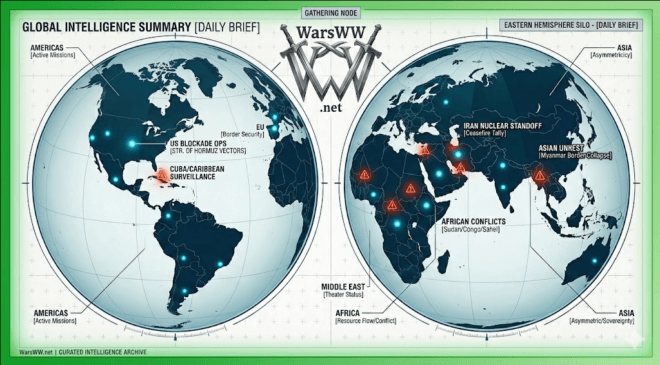
WarsWW Daily Brief | May 21, 2026

Intelligence Status: SOVEREIGN WATERWAY ENFORCEMENT / PETROLEUM INTERDICTION

Global Security Index: 9.8/10 (Severe Market Friction)

I. Middle East: Iran Institutionalizes the Hormuz “Permit & Toll” Regime

The standoff in the West Asia conflict has advanced from tactical military skirmishes to an aggressive legal and bureaucratic annex of global trade. Following weeks of maritime disruptions since the outbreak of hostilities in February, Tehran has operationalized a new mechanism to permanently sovereignize international transit passage through the Strait of Hormuz.

  • The PGSA Electronic Net: The newly minted Persian Gulf Strait Authority (PGSA) has officially drawn its geographic boundaries of enforcement. The zone functions as a strict maritime checkpoint bounded by a line connecting Kuh-e Mobarak (Iran) to southern Fujairah (UAE) on the eastern side, stretching to the tip of Qeshm Island (Iran) and Umm Al-Quwain (UAE) on the western threshold.
  • The Permit Mandate: All commercial shipping intending to cross the chokepoint must now coordinate directly with and secure digital authorization from the PGSA before tracking into the strait. Maritime intelligence firms note this effectively converts a historically open transit corridor into a state-administered permit and toll regime.
  • Kinetic Enforcement: The Islamic Revolutionary Guard Corps (IRGC) Navy is actively backing this regulatory push from Qeshm Island. The IRGC reiterated that warships are completely barred from passage and defended prior kinetic targeting of non-compliant vessels, asserting that refusal to obtain permits violates sovereign governance.
  • The US Counter-Blockade: The Trump administration is pushing back aggressively to force the waterway open. The US military boarded an Iranian-flagged oil tanker in the Gulf of Oman suspected of violating the American naval blockade. Simultaneously, Pakistan’s Army Chief Asim Munir has arrived in Tehran to mediate high-stakes peace proposals as Trump warns that negotiations are sitting on the borderline between a structural breakthrough and renewed military action.

II. Eastern Europe: The Syzran Refinery Strike

Ukraine’s strategic air campaign against the Russian energy ecosystem reached deeper into the domestic rear overnight, executing a highly accurate long-range drone operation.

  • The 800-Kilometer Incursion: Ukrainian long-range kamikaze drones bypassed extensive electronic warfare frameworks to target the Syzran Oil Refinery in the southern Samara region, more than 800 kilometers (500 miles) deep inside Russian territory.
  • Operational Impact: President Volodymyr Zelenskyy confirmed the attack, which ignited major fires across the Rosneft-operated facility. Local authorities acknowledged that two people were killed in Syzran during the raid. The strike severely degrades Russia’s capacity to process crude into military-grade fuel, following previous drone actions that have forced multiple central refineries to cut or entirely halt production.
  • The Air Attrition War: Russia’s Defense Ministry claimed its defensive grids intercepted a staggering 121 Ukrainian drones across the country. Conversely, Moscow launched its own wave of 116 drones into Ukrainian civilian and energy hubs, with Ukraine’s tactical air defense systems successfully downing 109 of the incoming targets.

III. Indicators to Watch

  • [LOGISTICS] Tanker Compliance Matrix: Watch the insurance telemetry of global shipping conglomerates over the next 48 hours. If European or Asian tankers begin complying with the email-based PGSA permit mandates, it will signal a de facto recognition of Iran’s regulatory control over the chokepoint.
  • [DIPLOMACY] The Enriched Uranium Redline: Monitor the outcome of Pakistan’s mediation track in Tehran. Hardline factions within Iran are pushing to keep highly enriched uranium inside the country, directly defying a core American prerequisite for lifting the naval blockade.

WarsWW Intelligence Note [REF: DAILY-2026-0521]

The creation of the PGSA is a masterclass in asymmetrical lawfare. By utilizing a nominal regulatory entity to dictate maritime coordinates between Iran and the UAE, Tehran is attempting to force commercial fleets to pay for protection, turning an active combat zone into a bureaucratic customs barrier. Meanwhile, Ukraine’s successful penetration into Samara proves that Russia’s massive electronic warfare investment cannot perfectly insulate its economic lifeblood from persistent, low-RCS drone swarms.

Ukraine Middle Strikes | Moscow Refinery | May 20, 2026
WarsWW Daily Brief | May 20, 2026

Intelligence Status: RE-ROUTED LOGISTICS / OPERATIONAL DEPTH INTERDICTION

Global Security Index: 9.8/10 (Severe Market Rupture)

I. Eastern Europe: The “Decisive” Pivot to Middle-Range Strikes

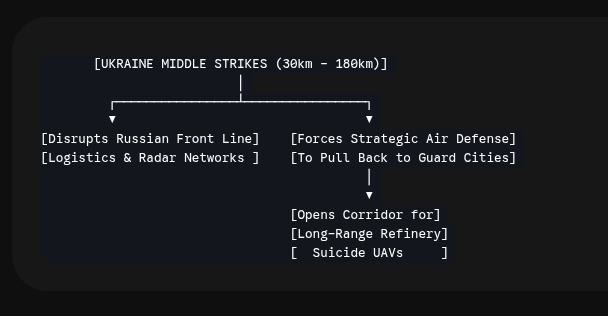
The nature of the Ukraine-Russia air war has structurally shifted. According to battlefield commanders, Ukraine has vastly scaled up and quadrupled its “middle-strike” capabilities since February, focusing on targets 30km to 180km behind frontlines to bleed Russian logistics at operational depth.

       [UKRAINE MIDDLE STRIKES (30km - 180km)]
                          │
         ┌────────────────┴────────────────┐
         ▼                                 ▼
[Disrupts Russian Front Line]    [Forces Strategic Air Defense]
[Logistics & Radar Networks ]    [To Pull Back to Guard Cities]
                                           │
                                           ▼
                                 [Opens Corridor for]
                                 [Long-Range Refinery]
                                 [  Suicide UAVs     ]

II. Global Economics: The Trade-Off of the Hormuz Blockade

The U.S.-Israeli kinetic escalation against Iran has triggered a cascading crisis in Western economic policy, forcing a quiet re-evaluation of current secondary sanctions.

III. Kremlin Attrition: Personnel and Tactical Realities

IV. Indicators to Watch

  • [NUCLEAR ANCHOR] Early Drills: Russia’s surprise activation of joint tactical nuclear weapons exercises with Belarus this week is assessed as an informational operation to deter NATO involvement following the Baltic drone incursions.
  • [ENERGY COMMERCE] The Third-Party Pipeline: Watch the import volumes of Indian and Turkish refined products into the EU over the next 14 days to gauge the true extent of the Russian oil baseline relief.

WarsWW Intelligence Note [REF: DAILY-2026-0520]

The global geopolitical theater is experiencing an ironic inversion. Ukraine’s specialized “middle strikes” are successfully choking off Russian oil refining infrastructure at home, yet the simultaneous conflict in Iran has forced Ukraine’s closest Western allies to turn a blind eye to third-party Russian oil imports just to stabilize their own domestic energy grids.
Daily Brief May 19, 2026

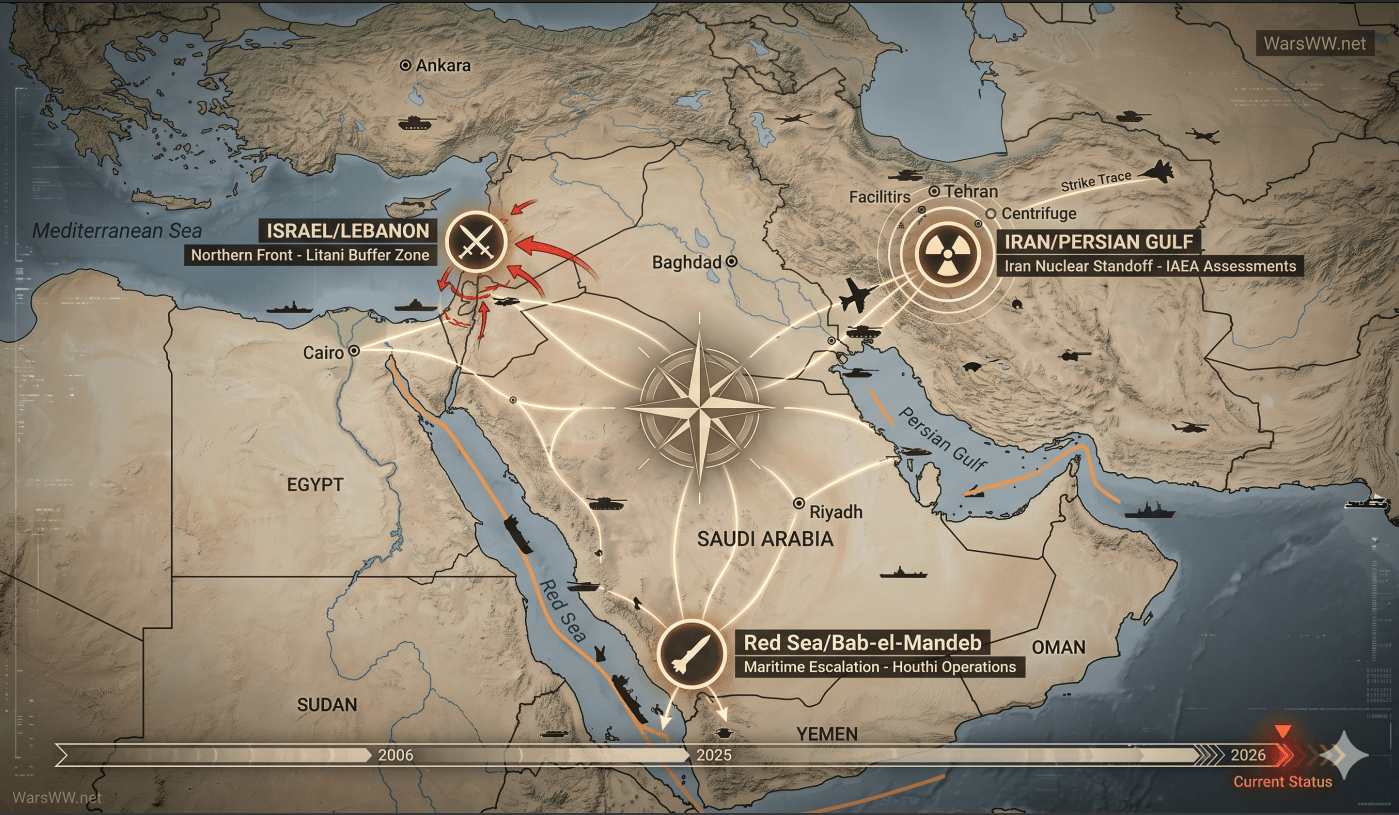
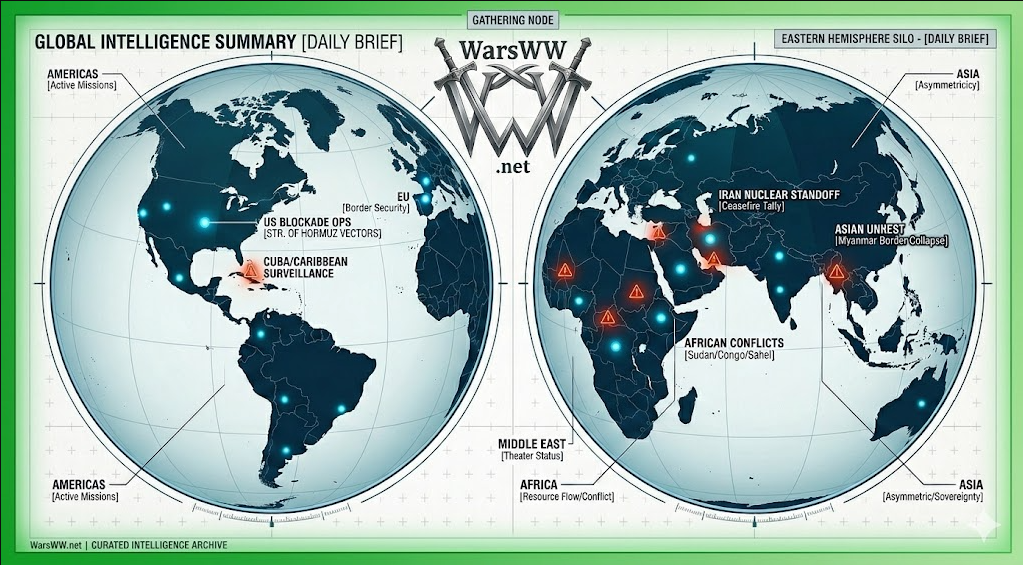
The dominant story of the past 24 hours is the Iran war crisis entering a fragile de-escalation phase, with Trump claiming he called off an imminent bombing campaign at the request of Gulf allies, while Iran reportedly signals willingness to negotiate a nuclear deal before hostilities resume. Simultaneously, a suspected hate crime shooting at a San Diego mosque killed three, underscoring domestic tension during a period of heightened Middle East conflict. Markets reflect deep anxiety: equities are down sharply across all indices with the Fear & Greed Index deep in “Extreme Fear” territory at 25.

KEY DEVELOPMENTS

INDICATORS TO WATCH (Next 24–48 Hours)

  1. Iran nuclear negotiations: Watch for any formal channel opening — whether via Oman, Pakistan, or Gulf intermediaries — confirming Trump’s pause is real vs. tactical messaging. Any breakdown resumes imminent strike risk for Gulf energy markets.
  2. Barakah Nuclear Plant damage assessment: UAE and IAEA statements on the extent of the reported drone strike. If the strike penetrated cooling or reactor infrastructure, this becomes a Category 1 nuclear safety and Gulf security escalation.
  3. U.S.-Canada defense suspension fallout: Congressional reaction and NATO ally responses. Watch for Canada to signal alternative security arrangements (e.g., bilateral UK-Canada or EU security dialogue).
  4. DRC/Uganda Ebola PHEIC response: WHO Emergency Committee actions, international health resource mobilization, and whether Uganda confirms cross-border spread requiring elevated containment protocols.
  5. VP Vance White House press briefing (19 May, 13:00 ET): First direct public statement on Iran de-escalation posture, Canada defense suspension, and domestic hate crime response. Could move markets and clarify policy ambiguity.

Daily Brief Ukraine Drone Swarm | Sudan Drones May 18 2026

WarsWW Daily Brief | May 18, 2026

Intelligence Status: ESCALATED AERIAL ATTRITION / THE DRONE OVERWATCH

Global Security Index: 9.7/10 (Critical Friction)

KYIV DARNYTSKYI DEATH TOLL STANDS AT 24; IRAN FORMS HORMUZ MARITIME AUTHORITY (PGSA); HEZBOLLAH FPV DRONE HITS IRON DOME; UN WARNS OF SUDAN DRONE CASUALTIES.

I. Eastern Europe: The “Deep Reach” Attrition Campaign

A massive escalation in aerial warfare has turned the region into a high-stakes duel over industrial and civilian infrastructure.

II. Middle East: The “Tattered” Truce & Hormuz Oversight

Drones are now being utilized both to bypass and enforce unstable ceasefires across the Middle East.

III. Africa: Sudan’s “Invisible” Drone War

The UN has issued a dire warning: Armed drones have become the leading cause of civilian deaths in Sudan’s conflict.

IV. Indo-Pacific: Pag-asa (Thitu) Sentinel Status

The Philippines has reached a critical milestone in its “deterrence by presence” strategy.


V. Spotlight: The Prague Armored Vehicle Summit

The 12th Annual Future Armoured Vehicles Central and Eastern Europe Conference opened today in Prague, bringing together three Major Generals and five Brigadier Generals from multiple NATO commands.


WarsWW Intelligence Note [REF: DAILY-2026-0518]

The common thread today is “Drone Saturation.” From the 500+ UAV swarm in Ukraine to the Iranian oversight authority in Hormuz, air superiority is no longer about expensive jets—it’s about who can maintain the most persistent, low-cost “eye in the sky” and who can jam it first.


Moscow Oil Refinery Drone Strike | Hormuz Strait Blockade May 17 2026

WarsWW Global Brief | May 17, 2026

Intelligence Status: DEEP AERIAL PENETRATION / MARITIME BLOCKADE

Global Security Index: 9.7/10 (Critical Friction)

I. Russia-Ukraine: The “Battle for Moscow” Air Campaign

In what is being described as the largest coordinated aerial offensive against the Russian mainland to date, Ukrainian forces launched a massive multi-vector drone wave overnight kyivpost.com.

II. Middle East: The Hormuz “Blockade & Toll” Standoff

The Strait of Hormuz remains the world’s most volatile maritime chokepoint as the U.S. and Iran engage in a tit-for-tat blockade aa.com.tr.

III. Indo-Pacific: Pag-asa (Thitu) Sentinel Status

The Philippines has reached a critical milestone in its “deterrence by presence” strategy in the Spratly Islands ipdefenseforum.com.

IV. Africa: Sudan’s Famine Frontline

Sudan is currently experiencing the world’s largest internal displacement crisis, with fighting intensifying in the east reliefweb.int.


V. Indicators to Watch (The Shadow Frontiers)


WarsWW Intelligence Note [REF: DAILY-2026-0517]

The strike on the Moscow Oil Refinery marks a psychological turning point. Ukraine is no longer just hitting “deep” Russia; it is hitting the infrastructure of the capital itself to force a domestic economic crisis. In the Middle East, the Hormuz “toll” system represents Iran’s attempt to normalize its control over international waters—a move the U.S. seems increasingly likely to challenge with kinetic force.


Ukraine Long Range Sanctions Lebanon Ceasefire Extension Thitu Island Runway Morales Arrest Warrant May 16 2026

WarsWW Daily Brief | May 16, 2026

Intelligence Status: ASYMMETRIC OFFENSIVES / HORSE-TRADING IN THE HORMUZ

Global Security Index: 9.6/10 (Critical Friction)


I. Eastern Europe: Zelensky’s “Long-Range Sanctions”

Ukraine has pivoted from a war of static frontlines to a campaign of strategic, deep-rear attrition kyivpost.com.

II. Middle East: The “Hormuz Toll” & Ceasefire Erosion

Diplomacy in the Middle East is currently a mix of high-stakes transit negotiations and blatant ceasefire violations thehindu.com.

III. Indo-Pacific: Pag-asa Runway Expansion

The Philippines is physically cementing its claim in the Spratly Islands through a massive infrastructure surge eurasiareview.com.

IV. Americas: The Morales Contempt Crisis

Bolivia’s internal security is deteriorating as the legal battle against the former president reaches a boiling point aljazeera.com.


V. Indicators to Watch (The Shadow Frontiers)


WarsWW Intelligence Note [REF: DAILY-2026-0516]

Today marks a critical juncture in “Distributed Attrition.” Ukraine is no longer fighting for hectares; it is fighting for the Kremlin’s supply lines. Meanwhile, the extension of the Lebanon ceasefire—amidst ongoing strikes—suggests that tattered truces are now the primary tool for tactical repositioning rather than actual peace.

24 Dead Kyiv Drone Attacks Un Humanitarian Convoy

WarsWW Daily Brief: Escalation in Ukraine Following Ceasefire Collapse

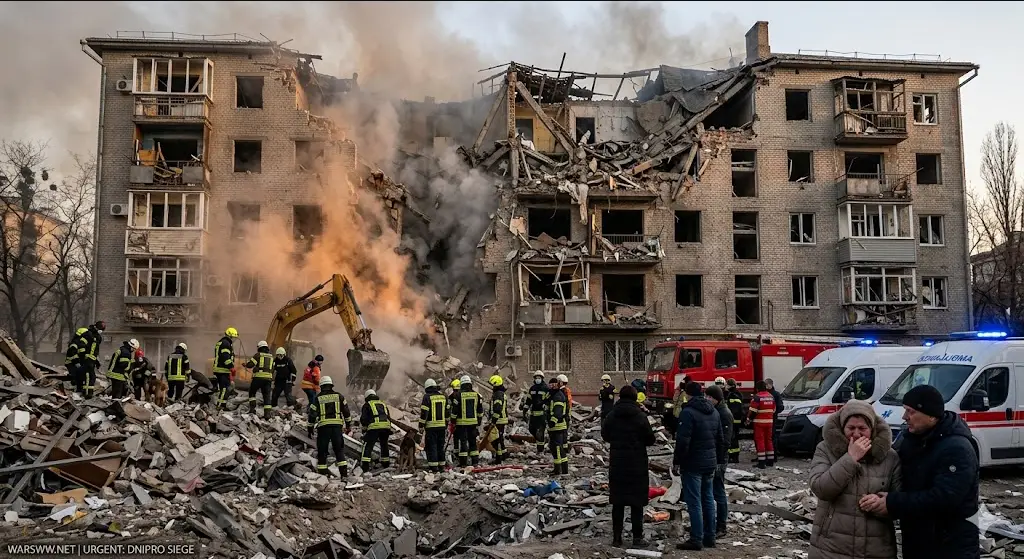
May 15, 2026 — The security situation in Ukraine has deteriorated rapidly following the collapse of the recent May 9–11 ceasefire. Intensive aerial assaults have struck key urban areas and humanitarian corridors, marking one of the heaviest periods of bombardment in recent months.

Kyiv Missile Strike: Death Toll Climbs to 24

A devastating Russian cruise missile attack on a residential neighborhood in Kyiv has claimed the lives of at least 24 people, according to updates provided by Ukrainian President Volodymyr Zelenskyy via the Associated Press. Emergency rescue crews spent over 24 hours clearing debris from the ruined nine-story apartment building located in the capital’s Darnytskiy district.

Key Details of the Assault:


UN Humanitarian Aid Convoy Targeted by Drone Strikes

Humanitarian operations face mounting perils as international aid vehicles continue to come under direct fire in frontline zones. The United Nations Office for the Coordination of Humanitarian Affairs (OCHA) confirmed that one of its clearly marked convoys was repeatedly targeted by drone strikes in southern Ukraine.

As documented by reports from Deutsche Welle, the OCHA convoy was assisting local authorities in Kherson to deliver shelf-stable food and hot meals when it was struck. A second drone hit the convoy during the active aid delivery. While all UN staff managed to evacuate the vehicles safely, a local civilian resident was killed in the immediate vicinity.

This follows a separate incident earlier in the week where a UN World Food Programme (WFP) food transport truck was immobilized by FPV drones in the Dnipro region, leaving the driver injured. Concurrently, the prominent NGO World Central Kitchen reported that an armored vehicle operated by its local restaurant partners sustained severe damage from a drone strike while delivering hot meals in Kherson. UN officials have strongly condemned the pattern of attacks, demanding full international investigations and accountability for strikes on humanitarian corridors.

Strategic Overview: Massive Drone Exchanges and Prisoner Swaps

Amid the intensification of aerial warfare, Ukraine launched a significant retaliatory counter-drone operation. The Russian Defense Ministry reported grounding or intercepting 355 Ukrainian drones overnight, forcing temporary flight suspensions across several domestic airports.

Despite the fierce spike in combat operations, diplomatic channels yielded a major breakthrough on the humanitarian front. Russia and Ukraine successfully executed a 205-for-205 prisoner of war exchange mediated by the United Arab Emirates. President Zelenskyy noted that this marks the first phase of a broader reciprocal agreement aimed at exchanging a total of 1,000 detainees from each side.

Kyiv Missile Attack Netanyahu Uae Secret Visit Japan Philippine Missile Firing May 14 2026

WarsWW Global Brief | May 14, 2026

Intelligence Status: MASS AERIAL ATTRITION / SECRET DIPLOMACY

Global Security Index: 9.5/10 (Severe Friction)

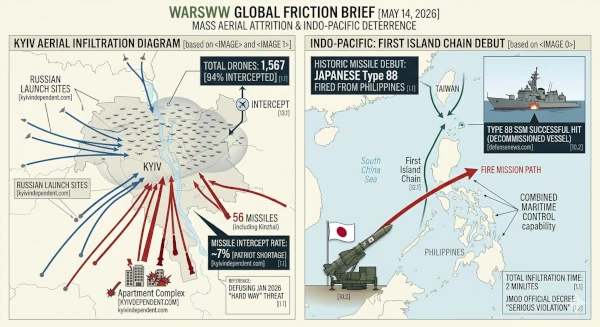
I. Russia-Ukraine: The “Calculated” Strike on Kyiv

Russia has launched what President Zelenskyy is calling the largest aerial attack of the entire war justsecurity.org.

II. Middle East: Secret Meets and “Ceasefire” Bloodshed

While official channels talk peace, the ground reality is a kinetic nightmare iranwire.com.

III. Indo-Pacific: The “First Island Chain” Missile Debut

A historic shift in regional defense occurred today in the Philippines defensenews.com.

IV. Africa: The Fall of El Fasher & Sudan Attrition


V. Indicators to Watch (The Shadow Frontiers)


WarsWW Intelligence Note [REF: DAILY-2026-0514]

The strike on Kyiv is a tactical exploit. Russia is betting that Ukraine has exhausted its Patriot/S-300 stocks on cheap Shahed drones, leaving the capital wide open for “Kinzhal” ballistic strikes. In the South China Sea, the Japan-Philippines missile firing is the boldest “anti-China” deterrent seen this decade.


Russia Sarmat Icbm Test Iran Missile Resilience Danjo Islands Breach May 13 2026

WarsWW Daily Brief | May 13, 2026

Intelligence Status: NUCLEAR ESCALATION / STRAIT OF HORMUZ STANDOFF

Global Security Index: 9.4/10 (Critical Friction)

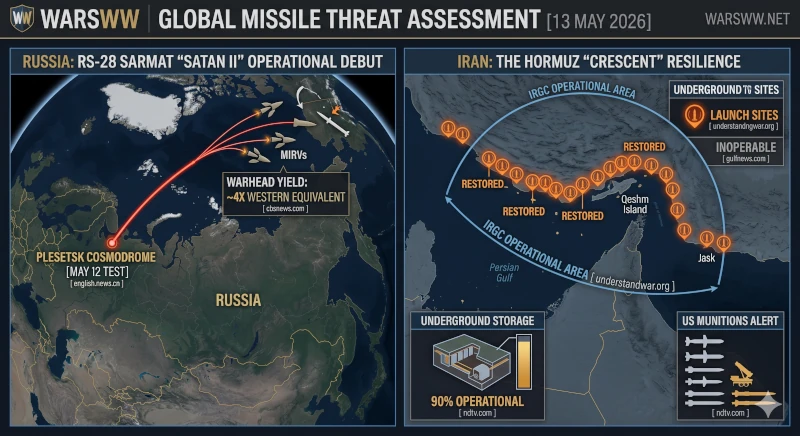
I. Russia: The Sarmat “Satan II” Operational Debut

In a move that has effectively ended the “Victory Day” diplomatic window, Russia has officially test-launched and operationalized its next-generation ICBM cbsnews.com.

II. Middle East: The “Phantom Decimation” of Iran

Despite weeks of Trump administration claims that Iran’s military was “crushed,” new intelligence suggests Tehran has successfully restored its primary strike capabilities gulfnews.com.

III. Indo-Pacific: Scramble for the Danjo Islands


IV. Indicators to Watch (The Shadow Frontiers)


WarsWW Intelligence Note [REF: DAILY-2026-0513]

We are witnessing a “Nuclear Renaissance.” Russia’s Sarmat deployment and the U.S. scramble to replenish “conventional” munitions prove that the threat of nuclear use is once again the primary currency of global deterrence. Iran’s resilience in Hormuz suggests that “Decimation” was a premature political label for a very deep-buried military reality.


Iran Nuclear Seizure Japan Danjo Islands Breach Greenland Bases Bolivia Insurgency May 12 2026

WarsWW Daily Brief | May 12, 2026

Intelligence Status: NUCLEAR BRINKMANSHIP / ARCTIC EXPANSION

Global Security Index: 9.3/10 (Critical Friction)

I. Middle East: The “Islamabad Impasse” & Nuclear Contingencies

The diplomatic track in Pakistan has hit a wall as the Trump administration shifts from negotiation to “Nuclear Reclamation” posturing commonslibrary.parliament.uk.

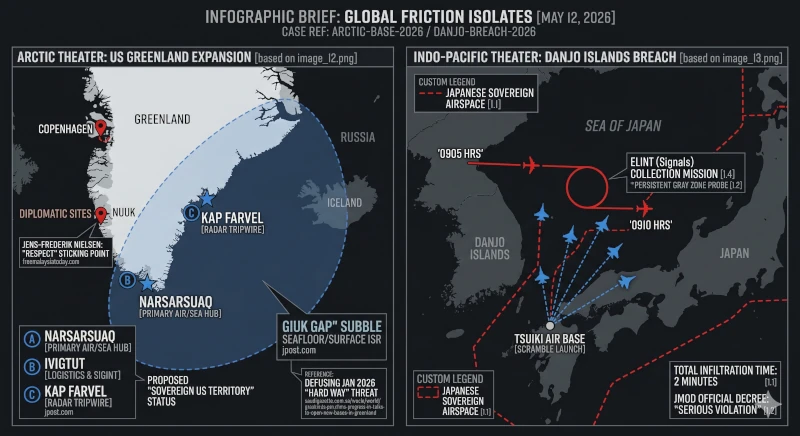
II. Indo-Pacific: The Danjo Islands Breach

Tensions between Tokyo and Beijing reached a multi-year high following a direct violation of Japanese airspace.

III. Arctic: The “Greenland Working Group”

The U.S. has entered high-level negotiations to significantly expand its military footprint in the Arctic to counter Russian and Chinese influence aa.com.tr.

IV. Americas: The Morales Insurgency

Bolivia has reached a breaking point as a legal crisis threatens to devolve into a national uprising.


V. Indicators to Watch (The Shadow Frontiers)


WarsWW Intelligence Note [REF: DAILY-2026-0512]

Today’s developments signify the end of “Middle Ground” diplomacy. The Greenland base talks indicate the U.S. is preparing for a multi-decade cold war in the Arctic, while the Morales warrant in Bolivia creates a new internal friction point in the Western Hemisphere that adversaries may look to exploit.