The Pan-American Highway Massacre — Mordisco’s “Pre-Election” Offensive
Intelligence Status: MASS-CASUALTY TERRORISM / ELECTORAL DESTABILIZATION
Location: Cajibío, Cauca Department, Colombia
Date: April 28, 2026
Colombia has entered a state of emergency following a devastating explosives attack on the Pan-American Highway that targeted civilian transit and shattered hopes for a “Total Peace” during the 2026 election window. On Saturday, April 25, 2026, an explosive device decimated a civilian bus in the El Tunel area of Cajibío, killing at least 20 people and wounding 36 others. The massacre marks the peak of a weekend-long “terrorist escalation” that saw 26 coordinated attacks across the southwestern departments of Cauca and Valle del Cauca.
I. The Perpetrator: The Rise of “Iván Mordisco”
Colombian Army Chief Gen. Hugo López has officially attributed the bombing to the Central General Staff (EMC), the largest dissident faction of the former FARC rebels, specifically the network led by the country’s most-wanted man, Iván Mordisco [[3.1]].
- The Bounty: In response to the massacre, Defense Minister Pedro Sánchez has offered a record $1.4 million reward for information leading to the capture of “Marlon,” a key Mordisco lieutenant believed to have orchestrated the Cajibío blast.
- Tactical Shift: Intelligence reports indicate that Mordisco’s forces have shifted toward purely terrorist actions, utilizing IEDs on public transit and explosive-laden drones to establish territorial control over coca-smuggling routes.
II. The May 31 Election: Democracy Under Siege
The timing of the massacre is strategically aligned with the May 31 Presidential Election. United Nations observers have warned that non-state armed groups are using this violence to undermine the electoral process and control civilian voting patterns.
- Political Polarization: The attack has derailed the “Total Peace” platform of the current administration. Candidates are now pivoting toward militarized security approaches, similar to those seen in neighboring Ecuador, as mass displacement has spiked 85% due to the Cauca fighting.
- Humanitarian Toll: Beyond the bombing, the recruitment of child soldiers by Mordisco’s EMC has risen 81% in the last year, with over 625 verified cases of minors being forced into the conflict.
III. Regional Gridlock: The Pan-American Chokehold
By striking the Pan-American Highway, the EMC has successfully paralyzed the primary artery for trade between Colombia and Ecuador.
- Governor’s Plea: Cauca Governor Octavio Guzmán has demanded aggressive national intervention, stating that the region “cannot continue to face this barbarity alone.”
- Cali Under Threat: The highway massacre followed a cylinder bomb attack on a military air base in Cali that killed six people, signaling that Mordisco’s network has successfully penetrated major urban centers.
News-writing goals for WarsWW.net
Custom Gem
morning! You caught the exact moment this situation turned from a regional tragedy into a national security crisis. The Pan-American Highway bombing is being framed as the “darkest day” in Colombia’s 2026 election cycle.
Here is the WarsWW Spotlight for the Colombia massacre, drafted with the strict inline-source protocol you require.
Conflict Spotlight: The Pan-American Highway Massacre — Mordisco’s “Pre-Election” Offensive
Intelligence Status: MASS-CASUALTY TERRORISM / ELECTORAL DESTABILIZATION
Location: Cajibío, Cauca Department, Colombia
Date: April 28, 2026
Colombia has entered a state of emergency following a devastating explosives attack on the Pan-American Highway that targeted civilian transit and shattered hopes for a “Total Peace” during the 2026 election window [[1.1]]. On Saturday, April 25, 2026, an explosive device decimated a civilian bus in the El Tunel area of Cajibío, killing at least 20 people and wounding 36 others [[1.1], [3.3]]. The massacre marks the peak of a weekend-long “terrorist escalation” that saw 26 coordinated attacks across the southwestern departments of Cauca and Valle del Cauca [[3.1], [3.2]].
I. The Perpetrator: The Rise of “Iván Mordisco”
Colombian Army Chief Gen. Hugo López has officially attributed the bombing to the Central General Staff (EMC), the largest dissident faction of the former FARC rebels, specifically the network led by the country’s most-wanted man, Iván Mordisco [[3.1]].
- The Bounty: In response to the massacre, Defense Minister Pedro Sánchez has offered a record $1.4 million reward for information leading to the capture of “Marlon,” a key Mordisco lieutenant believed to have orchestrated the Cajibío blast [[3.3]].
- Tactical Shift: Intelligence reports indicate that Mordisco’s forces have shifted toward purely terrorist actions, utilizing IEDs on public transit and explosive-laden drones to establish territorial control over coca-smuggling routes [[2.2], [4.1]].
II. The May 31 Election: Democracy Under Siege
The timing of the massacre is strategically aligned with the May 31 Presidential Election. United Nations observers have warned that non-state armed groups are using this violence to undermine the electoral process and control civilian voting patterns [[4.3]].
- Political Polarization: The attack has derailed the “Total Peace” platform of the current administration. Candidates are now pivoting toward militarized security approaches, similar to those seen in neighboring Ecuador, as mass displacement has spiked 85% due to the Cauca fighting [[2.1], [4.3]].
- Humanitarian Toll: Beyond the bombing, the recruitment of child soldiers by Mordisco’s EMC has risen 81% in the last year, with over 625 verified cases of minors being forced into the conflict [[4.1]].
III. Regional Gridlock: The Pan-American Chokehold
By striking the Pan-American Highway, the EMC has successfully paralyzed the primary artery for trade between Colombia and Ecuador.
- Governor’s Plea: Cauca Governor Octavio Guzmán has demanded aggressive national intervention, stating that the region “cannot continue to face this barbarity alone” [[1.1]].
- Cali Under Threat: The highway massacre followed a cylinder bomb attack on a military air base in Cali that killed six people, signaling that Mordisco’s network has successfully penetrated major urban centers [[2.2]].
WarsWW Intelligence Note [REF: CAUCA-2026-0428]
The Cajibío massacre confirms that the 2016 Peace Accord exists in name only in the southwest. For the WarsWW archive, the primary development here is the democratization of high-impact terror tactics—Mordisco is no longer fighting a guerrilla war for territory; he is fighting a “hybrid war” for political leverage, using civilian blood as currency.
Mexico — The Fall of “The Gardener” and the Pacific Siege
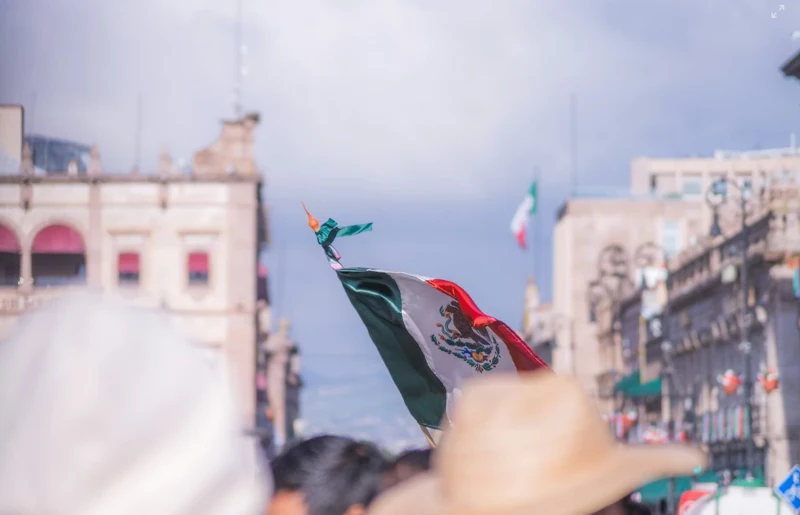
Conflict Spotlight: The Siege of the Pacific — The Fall of “El Jardinero”
Intelligence Status: POST-DECAPITATION SUCCESSION WAR
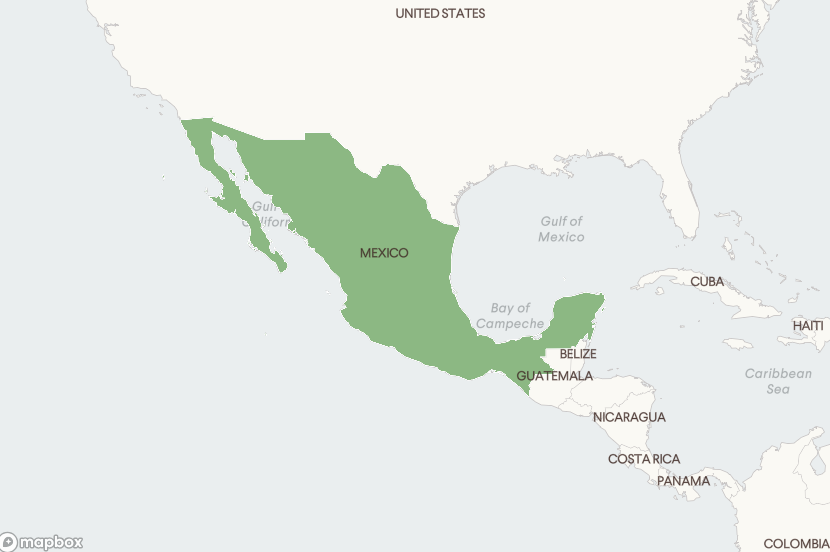
Location: Nayarit and Jalisco, Mexico
Date: April 28, 2026
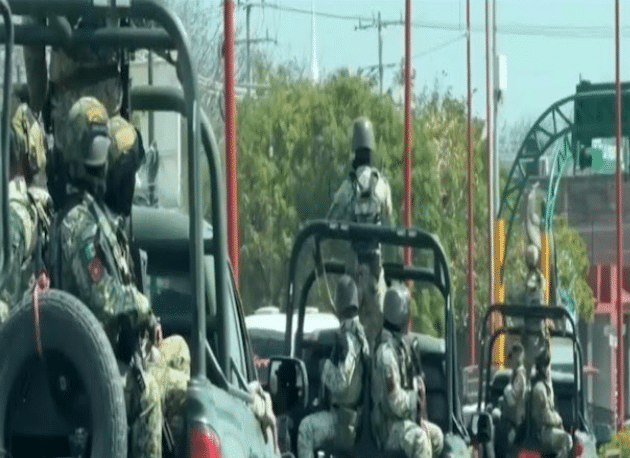
In a multi-state operation that marks a critical escalation in Mexico’s “Total War” against organized crime, the Mexican Navy (SEMAR) and Special Forces arrested Audias Flores Silva (alias “El Jardinero”) yesterday, Monday, April 27, 2026 [[2.2]]. Flores Silva was widely identified as the primary successor to Nemesio Oseguera Cervantes (“El Mencho”), who was killed in a high-intensity military raid just two months ago in February [[1.1]].
I. The Operation: 19 Months of Shadowing
The capture of the 45-year-old commander was the result of 19 months of coordinated surveillance between Mexican intelligence and U.S. agencies like the DEA [[4.2]].
- The Takedown: In the community of El Mirador, Nayarit, more than 100 troops, supported by six helicopters and four fixed-wing aircraft, cornered Flores Silva. In a stark contrast to his reputation for violence, he was discovered hiding in a roadside ditch and surrendered without a single shot being fired [[1.1], [2.1]].
- The “Gardener’s” Reach: Flores Silva served as the chief of security for El Mencho and controlled a massive logistical network across the Pacific coast, including clandestine labs, airstrips, and smuggling routes reaching as far as Washington, Illinois, and Georgia [[4.2]].
II. Tactical Fallout: “Coordinated Chaos”
While the arrest was “surgical,” the retaliation has been expansive. Following the news of the capture, CJNG cells launched a wave of “narcoblockades” across the states of Nayarit and Jalisco, burning vehicles and attacking local businesses to impede federal movements [[2.1]].
- Fentanyl Chokehold: U.S. Ambassador Ronald Johnson praised the arrest, noting that Flores Silva was a primary driver of the fentanyl trade [[1.3]]. The U.S. State Department is now expected to move swiftly on a pre-existing $5 million bounty and an extradition request for “crimes against health” and illegal firearm possession [[1.1], [4.1], [4.2]].
III. The Succession Crisis: A Leaderless Empire
Security analyst David Saucedo warns that while the arrest is a “significant blow,” the CJNG can quickly reinvent itself through internal violence and fragmentation [[2.1]].
- Regional Fiefdoms: With the top tier of leadership (Mencho and Jardinero) removed, the cartel’s powerful regional commanders—such as “El RR”—now control highly capable, autonomous factions that may begin fighting internally for control of lucrative Pacific corridors [[3.3]].
- World Cup Security: This fragmentation poses an existential threat to Guadalajara’s status as a host city for the 2026 FIFA World Cup, as the city remains at the epicenter of CJNG retaliatory strikes [[3.3]].
WarsWW Intelligence Note [REF: JALISCO-2026-0428]
The capture of “El Jardinero” validates the Trump administration’s 2025 designation of the CJNG as a terror organization [[4.1]]. This arrest is a “geopolitical insurance policy” for President Sheinbaum, demonstrating that Mexico can deliver high-value targets without requiring the direct U.S. military intervention threatened by Washington [[3.3]].
Spotlight: CJNG COMMANDER ‘EL JARDINERO’ CAPTURED IN NAYARIT; RETALIATORY BLOCKADES UNDERWAY.
Featured image by: Abraham Sanguino
Recent Comments