My ClassicPress Website

Sudan Saf Retakes Al Keili Garrison Blue Nile RSF Defeat 2026
The recapture of the Al-Keili military garrison marks a significant strategic pivot in the 2026 Sudan conflict. While much of the Western media is focused on the “tank-less” parades in Moscow, this victory in the Blue Nile state represents one of the most successful counter-offensives by the Sudanese government this year.

Conflict Spotlight: The Liberation of Al-Keili

Intelligence Status: STRATEGIC RECLAMATION / FRONTIER STABILIZATION

Theater: Blue Nile State, Sudan (Near Ethiopian Border)

Date: May 10, 2026

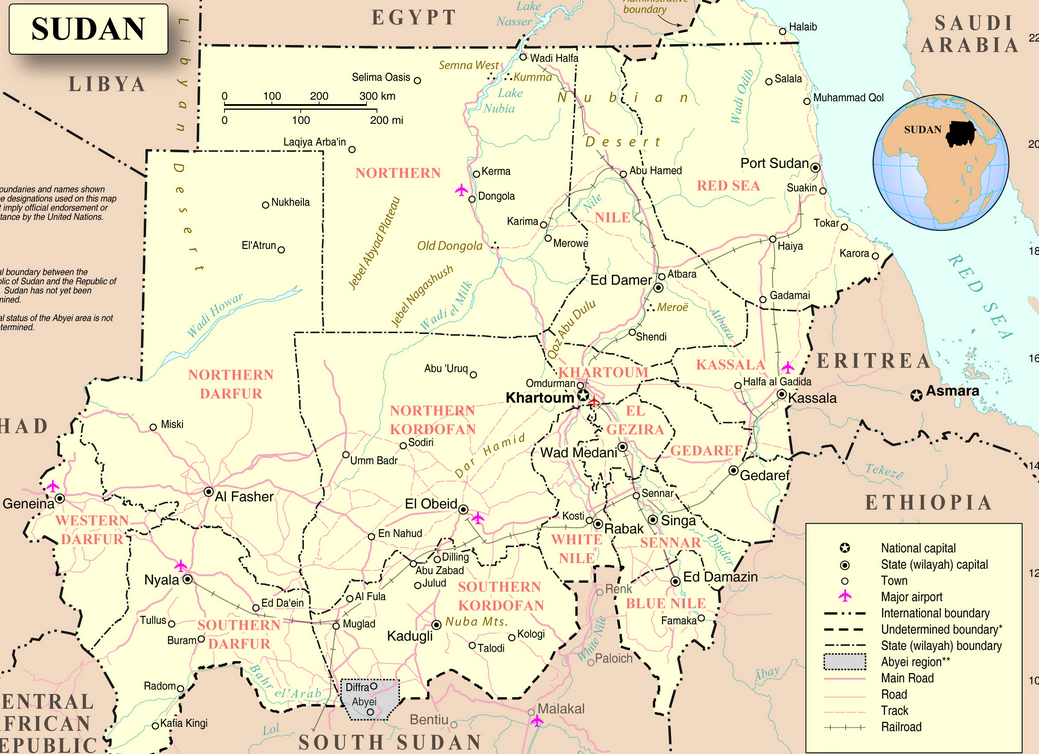
On May 9, 2026, the Sudanese Armed Forces (SAF) officially announced the “liberation” of the Al-Keili area, a vital military garrison positioned on the southern outskirts of Kurmuk aa.com.tr.

I. The Tactical Engagement

  • The 4th Infantry Strike: Led by the 4th Infantry Division based in Damazin, SAF forces launched a coordinated multi-axis assault to retake the garrison, which had fallen to a coalition of the Rapid Support Forces (RSF) and the SPLM-N (Joseph Tuka faction) in late April sudanspost.com.
  • Ethiopian Border Dynamics: Local security sources report that after the garrison’s collapse, remaining RSF units retreated south toward the Ethiopian border. Sudan has frequently accused Addis Ababa of providing logistical sanctuary to RSF-aligned forces—a claim Ethiopia continues to deny sudantribune.com.
  • Securing the Heartlands: By retaking Al-Keili, the SAF has blunted the RSF’s attempt to push further north toward Damazin (the regional capital). This effectively secures the “agricultural heartlands” of the Blue Nile, which are critical for Sudan’s collapsing food supply sudanspost.com.

I. Factoid: The Forces of Attrition

To understand why this garrison matters, one must understand the two primary forces tearing Sudan apart:

Feature Sudanese Armed Forces (SAF) Rapid Support Forces (RSF)
Leader General Abdel Fattah al-Burhan General Mohamed Hamdan Dagalo (“Hemedti”)
Origin The official national military of Sudan. Evolved from the “Janjaweed” militias of Darfur.
Political Intent The “Sovereignty” Play: Postures as the only legitimate government. Seeks to centralize power in Khartoum and Port Sudan brookings.edu. The “Revolutionary” Play: Claims to be fighting for “marginalized” peripheries against the “Khartoum center” hornreview.org.
2026 Status Reclaimed Khartoum (March 2025); controls the North and East cfr.org. Controls most of Darfur and much of the West and South cfr.org.
External Support Egypt, Turkey, and Iran (drones/logistics). UAE (alleged) and various regional tribal networks cfr.org.

III. The Humanitarian Friction

While the military victory is a morale boost for the SAF, the human cost remains catastrophic. The fighting around Al-Keili and Kurmuk has forced an estimated 30,000 civilians to flee their homes in just the last two weeks sudantribune.com. Both sides have been accused of “weaponizing starvation” by looting agricultural stocks and destroying water sources in the region brookings.edu.


WarsWW Intelligence Note [REF: SUDAN-ALKEILI-2026]

The retaking of Al-Keili suggests that the SAF is shifting from a purely defensive posture to a containment strategy. By cutting off the RSF’s southern supply lines near the Ethiopian border, the SAF is attempting to prevent the “partition of Sudan” that many analysts feared in late 2025. However, the war remains a “deadly divide” where both sides prioritize military victory over the survival of the 25 million people currently facing famine brookings.edu.


Conflict Spotlight: The Dilling Siege | South Kordofan Atrocities
Intelligence Status: SYSTEMIC ATTRITION / CIVILIAN MASSACRE

Theater: South Kordofan State, Sudan

Date: May 7, 2026

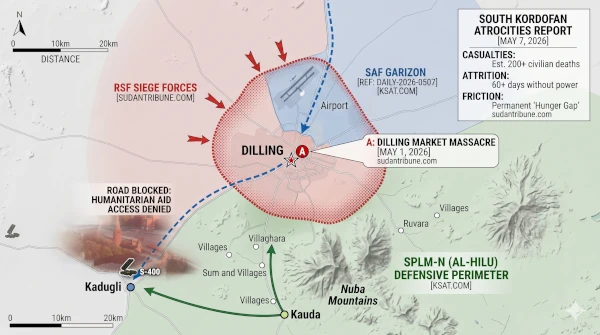
The city of Dilling and its surrounding areas in South Kordofan have become the epicenter of a horrific intersection of the Sudanese Armed Forces (SAF), the Rapid Support Forces (RSF), and the Sudan People’s Liberation Movement-North (SPLM-N) sudantribune.com.

I. The Tactical Friction: A Three-Way Siege

Dilling is strategically vital as a gateway between the Nuba Mountains and the plains of North Kordofan.

  • The “Zero-Sum” Front: The RSF has maintained a brutal siege on the city for months, while the SPLM-N (Al-Hilu faction) has moved in to “protect” Nuba populations, effectively turning the city into a fragmented battleground where civilians are trapped between three different command structures sudantribune.com.
  • Ethnic Targeting: Unlike the broader war in Khartoum, the violence in South Kordofan has taken on a strictly ethnic dimension. Reports indicate that Nuba and non-Arab communities are being systematically targeted for execution and displacement sudantribune.com.

II. The Humanitarian Friction: Systematic Erasure

The humanitarian fallout is no longer an accidental byproduct of war; it is being used as a weapon of coercion.

  • Conflict-Related Sexual Violence (CRSV): A joint statement from Canada, France, Germany, the UK, and the USA highlighted “appalling reports” of widespread sexual violence used by armed actors to terrorize the local population sudantribune.com.
  • The “Hunger Gap”: As of May 2026, the blockade of Dilling has prevented the planting of essential crops. UN observers warn that the “Hunger Gap” in South Kordofan is now permanent, with 85% of the population facing acute food insecurity sudantribune.com.

III. The “Global Silence” Factor

The crisis in South Kordofan represents a “High Friction” event that is largely invisible to global media.

  • Information Blackout: Telecommunications in Dilling have been cut for over 60 days. Most reports of massacres are only emerging weeks later via refugees reaching the South Sudanese border sudantribune.com.
  • Diplomatic Impotence: While the “Quad” (US, UK, Saudi, UAE) continues to negotiate for peace in Jeddah, the specific regional dynamics of the Nuba Mountains are being ignored, allowing local commanders to operate with perceived total impunity sudantribune.com.

WarsWW Intelligence Note [REF: SUDAN-SK-2026]

South Kordofan is the “High Friction” laboratory for 2026. It proves that when global attention is divided between the Middle East and Ukraine, regional actors in Africa will accelerate ethnic cleansing as a means of territorial consolidation. The Dilling Siege is not just a battle for a city; it is a battle for the ethnic survival of the Nuba people.
Houthi Fourth Phase Indian Ocean Shipping Risk 2026

Conflict Spotlight: Phase Four — The Houthi Indian Ocean Expansion

Intelligence Status: STRATEGIC BREAKOUT / LONG-RANGE INTERDICTION

Date: April 29, 2026

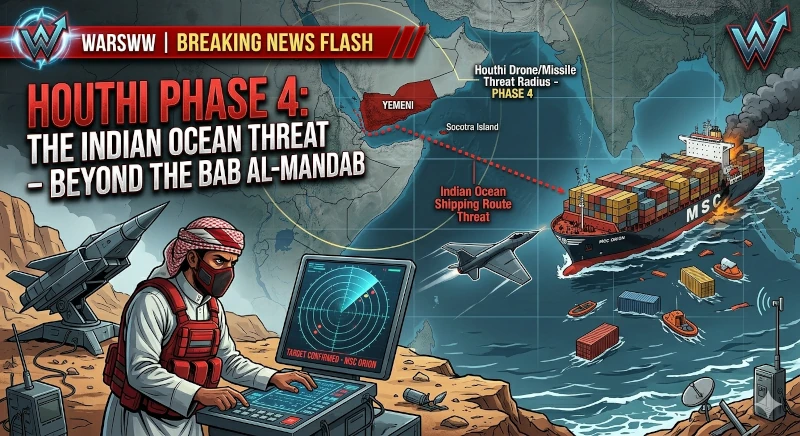
The Houthi movement (Ansar Allah) has officially initiated its “fourth phase” of maritime operations, shifting its focus from the confined waters of the Red Sea to the vast expanse of the Indian Ocean. This escalation follows through on threats made earlier this month to target any vessels associated with Israel, the U.S., or the UK that attempt to bypass the Red Sea blockade by sailing around the Cape of Good Hope.

. The Proof of Concept: The MSC Orion Strike

To signal this new capability, Houthi military spokesperson Yahya Sarea confirmed a targeted drone strike on the MSC Orion in the Indian Ocean yesterday, April 28, 2026.

II. Global Impact: The “Dual Blockade” and Oil Spikes

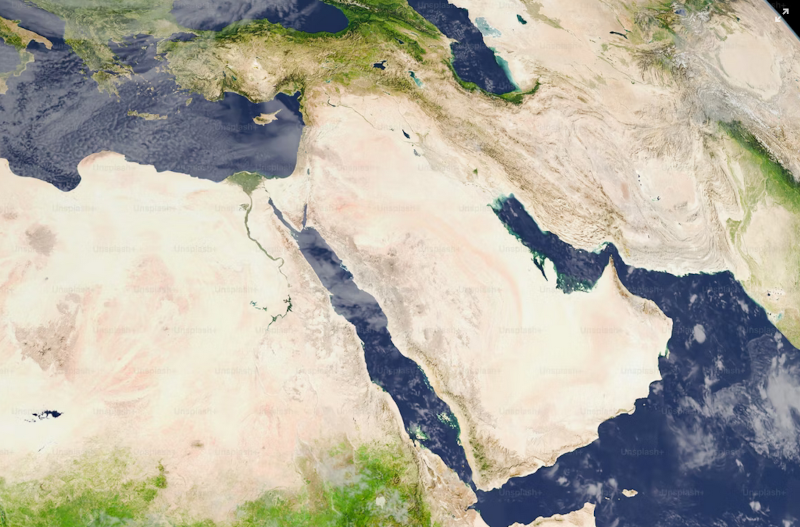
The Houthi expansion coincides with the ongoing 2026 Strait of Hormuz crisis, where Iranian forces have largely blocked energy trade since February 28.

III. Counter-Measures: The Limits of Deterrence

Despite the U.S.-led Operation Prosperity Guardian conducting repeated airstrikes on launch sites, Houthi forces have retained a high level of operational autonomy.

WarsWW Intelligence Note [REF: HOUTHI-OCEAN-2026]

The Houthi move into the Indian Ocean represents the death of the “Cape of Good Hope” safety valve. If the Indian Ocean is no longer a viable bypass for Red Sea traffic, the maritime insurance market may effectively collapse for vessels with any Western or Israeli ties. This is not just a military expansion; it is a direct attack on the logistical architecture of the global economy.


UNSC Gaza Transitional Governance Sudan Sanctions 2026

Conflict Spotlight: The Gaza Governance Gap & Sudan’s Sanction Surge

Intelligence Status: POST-CEASEFIRE FRAGILITY / SANCTIONS ESCALATION

Date: April 29, 2026

The UN Security Council (UNSC) convened yesterday, April 28, 2026, for a high-level open debate led by Bahrain to address the deteriorating security landscape in the Middle East and the escalating humanitarian crisis in Sudan. The session revealed a deepening rift between the diplomatic “Comprehensive Plan” and the lethal reality on the ground in both Gaza and Khartoum.

I. Gaza: The “Yellow Line” and Governance Gridlock

Despite the Comprehensive Plan to End the Gaza Conflict (UNSCR 2803) endorsed last year, Assistant Secretary-General Khaled Khiari warned the Council that the ceasefire is now “increasingly fragile.”

II. Sudan: Targeting the “Invisible War” Architects

In a significant move toward accountability in the Sahel-adjacent conflict, the UNSC 1591 Sanctions Committee yesterday approved the addition of four entries to its Sudan Sanctions List .

image original from Thomas Franke


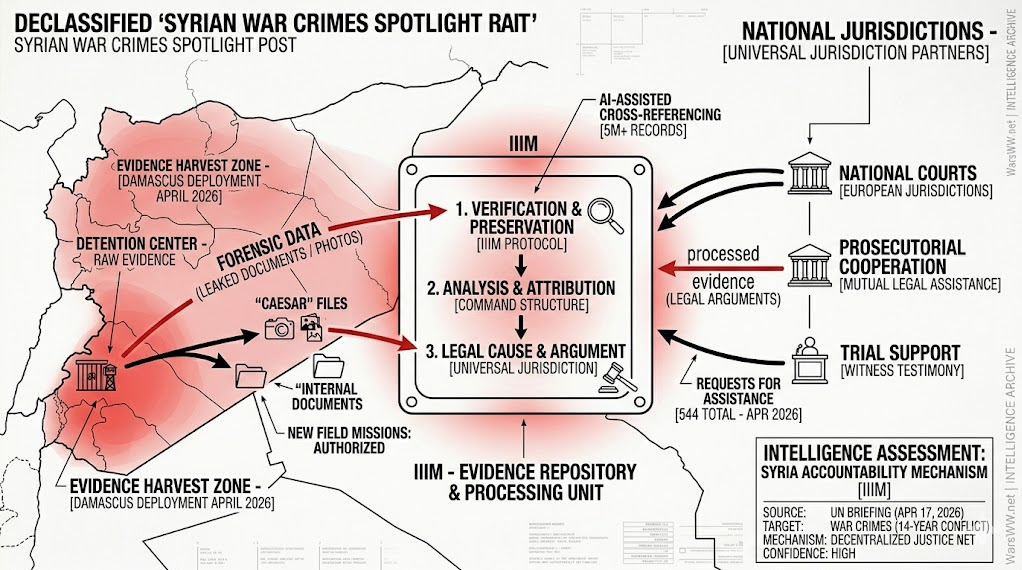
Syria’s “Justice Net”—IIIM Gains Ground in Damascus

The 14-Year Pursuit of Accountability—New Progress in Syrian War Crimes Prosecutions

April 17, 2026: The “Universal Jurisdiction” Breakthrough

While large news platforms focus on the shifting frontlines, a quieter but profound set of victories is occurring in European courtrooms. This week marks a significant milestone in the use of Universal Jurisdiction, a legal principle that allows national courts to prosecute individuals for international crimes (like torture and crimes against humanity) regardless of where the crimes were committed or the nationality of the victims and perpetrators.

The Intelligence Core: Key Legal Developments

The pursuit of justice for Syria has moved from a stalled UN Security Council to decentralized European accountability mechanisms:

The “Hidden” Challenge: Witness Protection and Fatigue | Transnational Repression

For WarsWW.net, we see the underlying story is the immense personal risk taken by the survivors who testify. Many are under active threat from transnational repression units, yet their persistence is what has kept the 14-year legal arc alive when diplomatic efforts failed.


The Intelligence Brief: Concurrent with the diamond debate, ASG Robert Petit (Head of the IIIM) provided a landmark update on the 14-year pursuit of Syrian war crimes accountability.

Sources. GA/12757


syrian-survivors-transitional-reprssion

“The Cost of Courage”

The ‘Hidden’ Challenge: Transnational Repression & Witness Fatigue

The April 2026 UN briefing highlighted a sobering reality: as the number of universal jurisdiction cases hits a record high (544 requests), the pressure on the Syrian diaspora has intensified.

The Protection Gap: While the IIIM preserves evidence, it lacks a formal mandate for witness protection. This leaves survivors dependent on the varying domestic laws of host nations, creating a “lottery of safety” for those who risk everything to name their tormentors.

Transnational Repression: Survivors living in Europe face “digital and physical reach-back” from remnant security networks. Witnesses have reported receiving anonymous threats against family members still inside Syria shortly after testifying in European courts.

Witness Fatigue: Many survivors are being asked to recount their trauma across multiple jurisdictions (e.g., testifying in Germany, then France, then Sweden for related cases). ASG Robert Petit noted that justice must not become an “extractive process” that exhausts the very people it seeks to serve.

Connected Reads:


Sudan Conflict: Darfur Air Strikes Escalate

Sudan: Escalating Air Strikes Across Darfur Leave Dozens Dead Amid Rising Humanitarian Crisis

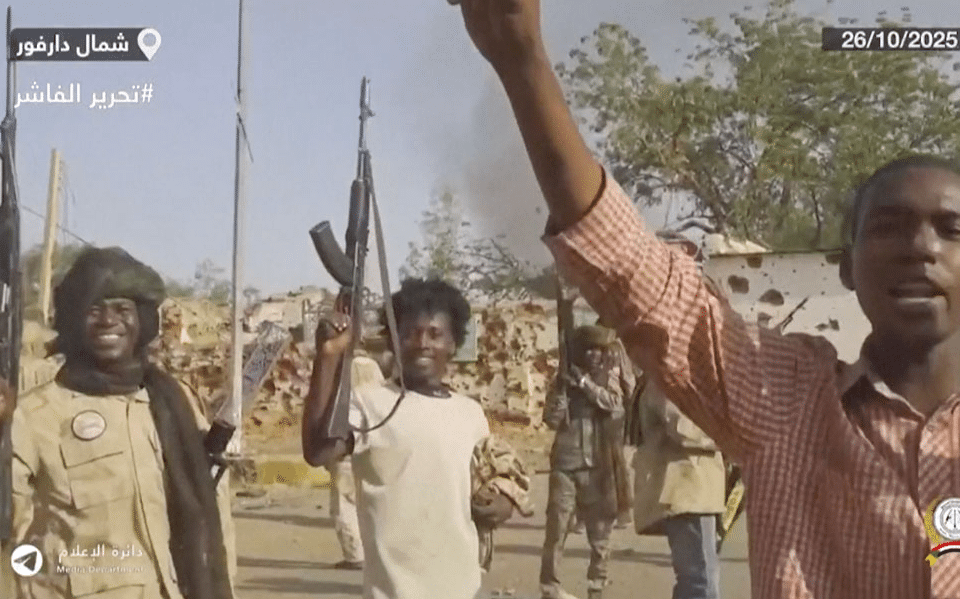
EL GENEINA / ED DAEIN — The Sudanese Armed Forces (SAF) have significantly intensified aerial operations across the Darfur region this week, with coordinated drone strikes resulting in at least 24 confirmed deaths and dozens of injuries. The strikes, which targeted key urban centers including El Geneina, Ed Daein, and Al-Sereif, mark a sharp escalation in the year-long conflict between the SAF and the paramilitary Rapid Support Forces (RSF).

Verified Casualties and Strike Locations

Local monitoring groups and humanitarian organizations have provided detailed breakdowns of the fatalities, though they warn that the final death toll may rise due to the severity of the fires caused by the bombardments.

Strategic Escalation of the Conflict

Military analysts suggest the SAF is shiftng toward an extensive aerial campaign to degrade RSF logistics. The Sudan Tribune reports that recent operations have focused on severing fuel supply lines originating near the Chad border. However, the high civilian toll in marketplaces and residential areas has drawn sharp international condemnation.

The timing of this escalation coincides with the third anniversary of the conflict’s outbreak. Amnesty International has warned that both warring parties are increasingly using indiscriminate attacks, further exacerbating what the UN describes as one of the world’s worst humanitarian disasters.

A Growing Humanitarian Vacuum

The surge in drone activity has paralyzed aid operations in several Darfur states. Local sources in El Geneina report that drones remain a constant presence in the skies, fueling panic and forcing international NGOs to restrict staff movements.

The UN Fact-Finding Mission on Sudan recently emphasized that the lack of accountability for these strikes has emboldened both the SAF and RSF to continue operations in densely populated areas, heightening the risk of further atrocity crimes as the war enters its fourth year.


Image of map from https://www.ohchr.org/en/hr-bodies/hrc/ffm-sudan/index

Iranian Ballistic Missiles Target Saudi Energy Hubs; 7 Intercepted Over Eastern Province

WarsWW News Desk Published: April 7, 2026 | 518 words, 3 minutes read time.

DHAHRAN, Saudi Arabia — In a major escalation of the 2026 regional conflict, Saudi Arabian air defenses intercepted and destroyed seven Iranian ballistic missiles launched toward the kingdom’s oil-rich Eastern Province early Tuesday. While the Saudi Ministry of Defense confirmed the successful neutralization of the primary threats, falling debris has reportedly ignited fires near critical energy infrastructure, including the Al Jubail industrial complex, the world’s largest petrochemical hub.

The Attack and Interception

According to Maj. Gen. Turki al-Malki, spokesperson for the Saudi Ministry of Defense, the “hostile aerial targets” were detected in the early hours of April 7. The Royal Saudi Air Defense Forces (RSADF) engaged the missiles over the Eastern Region, a strategic heartland for global energy production.

Saudi Arabia’s Strategic Response

Riyadh has maintained a stance of “strategic restraint” throughout much of the 2026 Iran-Israel war, but this direct targeting of the Eastern Province marks a shift in the kingdom’s defensive posture.

  1. Defense Mobilization: The Ministry of Defense has placed all Patriot and THAAD missile battery units on “Red Alert” across the eastern seaboard and the capital, Riyadh.
  2. Diplomatic Condemnation: In a phone call with Crown Prince Mohammed bin Salman, Pakistani PM Shehbaz Sharif condemned the “overnight attack on Jubail” and reaffirmed Islamabad’s military support for the kingdom.
  3. Energy Continuity: Saudi Aramco has reportedly activated its emergency business continuity plan, diverting some crude flows toward Red Sea terminals via the East-West Pipeline to bypass the volatile Gulf coast.

Global Oil Market Fallout

The strikes come at a precarious moment for global markets. With the Strait of Hormuz already restricted, the direct threat to Saudi production facilities has sent Brent Crude prices surging toward $125 per barrel.

Analysts warn that even successful interceptions pose a risk. “The psychological impact of debris hitting Jubail is enough to trigger a massive risk premium,” noted one energy analyst at the Energy Economics and Society Research Institute. “If Saudi Arabia’s ‘heartland’ is no longer considered a safe haven, the global energy supply chain faces a systemic collapse.”

The “April 7 Deadline”

The attack occurred just hours before a critical deadline set by U.S. President Donald Trump, who warned of “devastating attacks” on Iranian infrastructure if Tehran does not cease its regional escalations and reopen maritime corridors. The UN has urged all parties to avoid targeting civilian and energy infrastructure, citing the risk of a “total collapse of international law.”


For a minute-by-minute breakdown of maritime incidents and missile strikes, visit our Complete Timeline of the 2026 Red Sea Escalation.

Drone Strike Targeted the Al-Jabalain Hospital in Sudan’s White Nile State

On April 2, 2026, a devastating drone strike targeted the Al-Jabalain Hospital in Sudan’s White Nile State, killing at least 10 people, including seven medical professionals.

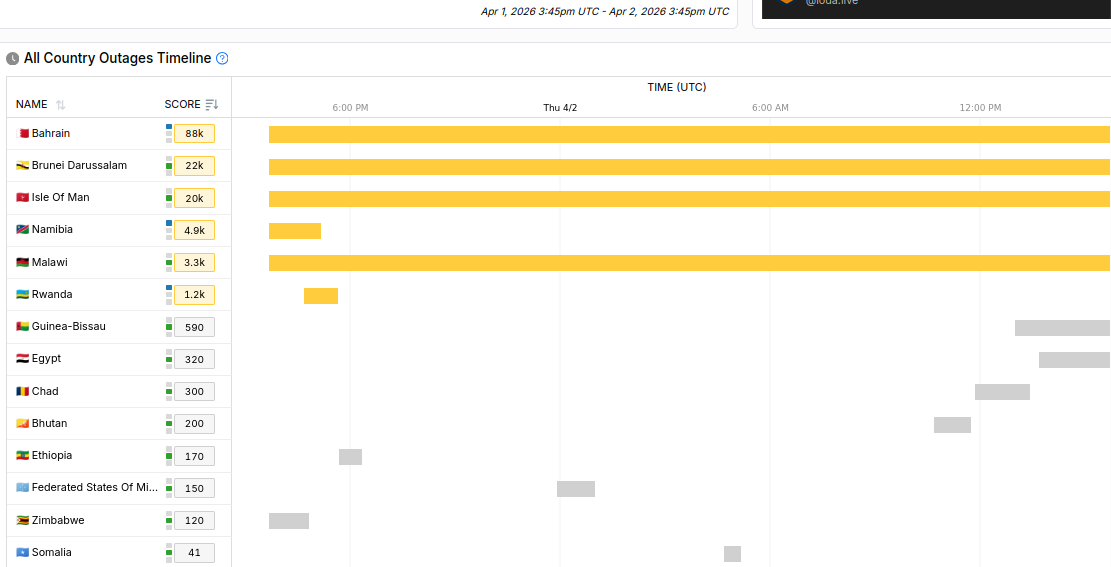
Here is what we know about the verified report for WarsWW.net, cross-referenced with the ongoing BGP and electronic warfare activity in both the Sudan and Russia/Tatarstan theaters.

[CRITICAL] Hospital Strike in Sudan; BGP Anomalies Signal Expanding “Digital Front”

WHITE NILE STATE, SUDAN (April 3, 2026) — A drone strike attributed to the Rapid Support Forces (RSF) has struck Al-Jabalain Hospital, a primary medical hub in central Sudan. The attack, which occurred during a children’s immunization campaign, resulted in at least 10 fatalities, including the hospital’s director-general and administrative manager.

1. The Incident: Al-Jabalain Hospital Strike

Medical charity Doctors Without Borders (MSF) confirmed that two separate drone strikes hit the facility, specifically targeting the operating theater and the maternity ward.


2. Regional BGP Activity: The “Tatarstan-Sudan” Parallel

In a significant development for our readers tracking the digital dimension of conflict, network monitors have recorded simultaneous BGP (Border Gateway Protocol) anomalies in both the Sudan and Volga (Russia) theaters over the last 24–48 hours.

Sudan Theater (April 2–3, 2026):

Russia/Tatarstan Theater (March 31 – April 3, 2026):

3. Strategic Analysis: The Normalization of Hybrid Warfare

The events in Sudan and Russia reveal a shared strategy: the use of kinetic strikes (drones) followed immediately by digital isolation (BGP manipulation).

  1. Denial of Information: By disrupting BGP routes, aggressors prevent the immediate upload of war crimes evidence (such as footage from the Al-Jabalain hospital).
  2. OSINT Blindness: These “digital tolls” and routing loops make it increasingly difficult for independent analysts to verify if a site was hit by an “equipment malfunction” or a deliberate strike.

Expert Brief for WarsWW.net Readers

As Judd-Oliver has consistently highlighted, the Sovereign Internet model is no longer exclusive to Russia. The RSF’s ability to disrupt local BGP routes suggests that advanced electronic warfare tools are being exported or developed by non-state actors at an alarming rate.


Sources: Nizhnekamskneftekhim Petrochemical Incident (March 31)

Sources: Al-Jabalain Hospital Strike, Sudan (April 2)

Sources: Digital Infrastructure & WTO (March 30)

Sources: Somalia & Baidoa Takeover (March 30)


Weapon of Hybrid Warfare: BGP (Border Gateway Protocol) leak

The BGP route leak that impacted Namibia on January 22, 2026, serves as a stark reminder that in modern warfare and geopolitics, the most effective “blockade” isn’t always at a shipping port—it’s at the data center. While this specific incident was attributed to a configuration error, it highlights a critical vulnerability in the backbone of global communications.

For our readers at WarsWW.net, here is an expanded technical and strategic breakdown of why this incident matters in the context of international security and infrastructure resilience.


[Technical Analysis] The Invisible Front: Namibia’s BGP Fragility

1. The “Miami Connection”: Anatomy of the Leak

The root cause—a misconfiguration at a Cloudflare router in Miami—demonstrates the “butterfly effect” of global networking. In a BGP (Border Gateway Protocol) leak, a router essentially tells the rest of the world, “Send all traffic for Namibia through me.” * The Result: Traffic meant for Windhoek or Walvis Bay was suddenly diverted to Florida.

2. BGP as a Weapon of Hybrid Warfare

While the January 22nd event was accidental, the same mechanism is a primary tool for state-sponsored cyber interference.

3. Strategic Significance for Namibia & Southern Africa

Namibia is a growing hub for undersea cable landings (such as the Equiano and WACS cables). A BGP destabilization doesn’t just affect local users; it affects the regional transit of data for landlocked neighbors like Botswana and Zimbabwe.

4. The Defense: RPKI and “Sovereign” Routing

To safeguard against these anomalies, Namibia is moving toward a more defensive posture:


[Deep Dive] Why WarsWW.net Tracks BGP Anomalies

In 2026, we have seen “Digital Tolls” and “Electronic Blockades” become as common as naval skirmishes. The Namibian incident proves that a nation’s sovereignty is now tied to its routing stability.

Editorial Note for Readers

We are currently monitoring whether any specific Autonomous Systems (AS) in Namibia—particularly those linked to government or military logistics—show signs of continued “path hunting” or underperformance. In a multi-polar world, keeping the “Digital Path” clear is the first line of national defense.


To support your guest writers and OSINT (Open-Source Intelligence) contributors, this technical checklist is designed to help them differentiate between a physical infrastructure failure and a deliberate “digital blockade” or routing anomaly.

By following these steps, your team can provide more accurate, verified reports for WarsWW.net regarding internet blackouts in conflict zones.

[Technical Checklist] OSINT Verification: BGP Hijack vs. Physical Cut

When a region suddenly goes offline, use this step-by-step process to identify the root cause before reporting.

Step 1: The “Macro” View (Global Connectivity)

Before assuming a local issue, check if the disruption is part of a larger global routing problem.

Step 2: Check for Route Leaks & Hijacks

If the region is “visible” but unreachable, an adversary may be misdirecting the traffic.

Step 3: Analyze “Latency Spikes” (The Satellite Check)

Physical infrastructure damage often forces traffic onto slower backup routes.

Step 4: Verify “BGP Zombies”

In high-intensity electronic warfare, “zombie routes” can trick the internet into thinking a dead network is still alive.

Step 5: Correlate with “Kinetic” Events

Always cross-reference technical data with on-the-ground reporting.


Sudan’s Devastating Civil War Update

As the Sudanese Civil War enters its third year (March 2026), the conflict between the Sudanese Armed Forces (SAF) and the Rapid Support Forces (RSF) has evolved into a catastrophic stalemate, shifting from a power struggle in Khartoum to a nationwide war of attrition.

Current State of the Conflict (March 2026)

The front lines have largely stabilized along a west-central corridor in Kordofan, with neither side able to secure a decisive victory.


Fueling the Battle: Funding and Logistics

Both factions rely on a mix of domestic resource exploitation and significant foreign backing to sustain their military operations.

Feature Sudanese Armed Forces (SAF) Rapid Support Forces (RSF)
Primary Funding Control over state institutions, the central bank, and alliances with regional powers. Massive gold mining and export operations in Darfur and Kordofan.
Key Foreign Backers Supported by Egypt, Saudi Arabia, Turkey, and Iran, providing drones and political legitimacy. Heavily backed by the United Arab Emirates (UAE) with arms and logistics.
Internal Logistics Leverages formal military bases and recruitment of local “Joint Forces” and RSF defectors. Operates through mobile paramilitary units and informal smuggling networks across the Chadian and Libyan borders.


National Impact: A Nation on the Brink

The war has created what many agencies call the largest humanitarian crisis of the 21st century.